Pages

The View from My Kitchen

Benvenuti! I hope you enjoy il panorama dalla mia cucina Italiana -- "the view from my Italian kitchen,"-- where I indulge my passion for Italian food and cooking. From here, I share some thoughts and ideas on food, as well as recipes and restaurant reviews, notes on travel, a few garnishes from a lifetime in the entertainment industry, and an occasional rant on life in general..

You can help by becoming a follower. I'd really like to know who you are and what your thoughts are on what I'm doing. Every great leader needs followers and if I am ever to achieve my goal of becoming the next great leader of the Italian culinary world :-) I need followers!

Grazie mille!
Showing posts with label Fast Food. Show all posts

Tuesday, December 31, 2024

McDonald's Friendly Service: The Ultimate Oxymoron

The Night of the Blank Stare


My wife is one of those rabid fans of McDonald's McRib, so when she got a craving for one the other night, love took the place of common sense and I ventured out to the local Mickey D's to fulfill her wish.

Upon arriving at our neighborhood fast food palace, I couldn't help but notice that none of the exterior lights were illuminated at seven o' clock on a dark winter night. Not even the iconic golden arch towering high above the roofline. If I hadn't known the place was there, I wouldn't have known it was there. So, when I entered, I brought this to the attention of an employee, a young female who was rather desultorily mopping the floor. And in response, I got my first Blank Stare.

Now, for the sake of being a general nuisance, I have been known to speak Italian to employees of Olive Garden and other pseudo-Italian places. But, here, caro lettore, I assure you I was speaking perfect, unaccented English. For all the response I got, however, I might as well have been speaking Italian. Just a Blank Stare. For all I know, I could have informed her that her shoes were on fire and I probably still would have gotten the same Blank Stare.

Moving on, I stepped carefully over the staring girl's handiwork and made my way to the counter in order to order my wife's McRib. You know, McDonald's actually discourages such behavior nowadays. They would much prefer that you order through their app or use that oh-so-personal ordering kiosk positioned right where you can hardly avoid it. But if you really must be old-fashioned and insist on actually speaking to a flesh and blood person, there are still a few of them around to serve you. All you have to do is find one and then get their attention. Easier said than done.

In retrospect, I think this is McDonald's way of admitting defeat. They know that the personality level of their employees is roughly equivalent to that of an automaton so they just put an actual automaton out front to begin with.

Anyway, there were at least four uniformed people “back there” that I could see and I know that at least two of them saw me step up to the counter because they made eye contact with me. They knew I was there. But they apparently couldn't have cared less. I guess it wasn't their job to man the counter, ergo, it similarly wasn't their job to find the person or persons whose job it was. So they just gave me the Blank Stare as I stupidly stood there waiting for service.

Eventually, from somewhere “back there,” someone in a management shirt appeared. “Ah,” I thought, “she is going to wait on me.” Alas, no. She was obviously focused on something having to do with the ice cream cone in her hand. She stood with her back toward me, intent on addressing the aforementioned Blank Starers. Whatever they were all discussing was evidently more important than taking my order as they all discussed it for quite some time. Finally, when I heard someone else “back there” shout out, “There's somebody at the back window,” I took the opportunity to chime in with, “There's also somebody at the front counter!” Well, that startled them all into noticing me. And giving me a Blank Stare. No greeting, no apology; simply a look that said, “who the hell are you and what are you doing standing there?”

Management person moved slowly to the register and stood there waiting for me to explain myself. Apparently, in lieu of anything along the lines of “hello,” or “may I help you,” her mere acknowledgment of my presence was all I was going to get. So I opened the one-sided conversation with the same observation about the lack of exterior lights causing me to almost miss the entrance. Surely, I thought, the manager would be interested in knowing this. Nah. I just got another Blank Stare. Not even a grunt.

Okay. I soldiered on and placed my order. A mumbled, “Is that all?” demonstrated that she could, indeed, verbally communicate, but when I said “yes” and proffered a gift card as payment, she merely pointed in the general direction of the POS terminal and said, “right there.” Ah, how foolish of me not to have noticed.

She came around a few minutes later to inform me that my order would be another couple of minutes because they were cooking the fries. Gamely attempting to be personable, I said, “Oh, good. I prefer them that way.” Blank Stare. Not even a smiling Blank Stare. Just the kind that said I was really being annoying by wanting something remotely resembling friendly, competent service.

Ultimately, my bagged order was placed on the counter in front of me and a guttural noise was made that could perhaps have been interpreted as “thank you” had I been in a more generous frame of mind. By now, though, I was more of a mind to interpret it as, “get the hell out of here and stop bothering me.” Especially since the utterance was delivered with the now-to-be-expected Blank Stare.

Sadly, this was far from an isolated incident. Somehow, the default setting on the faces of most fast food employees these days is flat affect, a clinical term defined as “a lack of emotional expression or response, often symptomatic of a mental health condition or of medication side effects.” I don't think that's the case in most cases. Rather, I think it's just a symptom of infinitesimally small and woefully inadequate social skills, caused, no doubt, by too much interaction with an electronic device and not enough with an actual person. After all, screens don't particularly care if you smile at them. But people do.

Now I'm not expecting the red carpet treatment or Michelin star service at a fast food joint. These are entry level jobs being filled by older teens and young adults with very limited social interaction beyond their own peer groups, groups where the things the rest of polite society consider to be rudeness are merely the accepted norm. But surely these young folks can muster something better than a sullen stare for the people who are financing their livelihoods.

Some fast food places can pull it off. Chick-fil-A, for example. I don't know how they skim the cream of young job seekers there, but I can unequivocally say that I have never had a bad service experience at a Chick-fil-A, a franchise where smiling faces and eager attitudes abound. And I'm not alone in that regard. Survey after survey has found that Chick-fil-A rates at the top of the service scale among fast food outlets. And the home of the Big Mac, the shiny Golden Arches, and the surly Blank Stare consistently ranks at the bottom of such surveys. So it's not just me. Seems that when McD's kicked their happy, smiling clown mascot to the curb, happy, smiling employees followed.

I don't know the answer. Chick-fil-A tends to pay its starting employees a little more than average, so maybe there's something there. But, in general, I think it's a matter of attitude. Young people just entering the job market seem sorely disappointed when they don't start at the top and it shows in their attitude. They seem to feel that they are doing their employer an immense favor by simply showing up for work and then they proceed to make their customers feel like impositions upon their paid social time, which, apparently, is what they consider their jobs to be. And I don't know how to solve that problem.

This is where I could come off as the curmudgeonly grandfather and say, “Back in my day, we worked for a dollar an hour and we were glad to get it!” Which is true, of course, but not really germane to the current issue. Which is either how do we get McDonald's employees to behave more like Chik-fil-A employees do or how do we get Chick-fil-A to start selling McRib sandwiches?

In the meantime, would you like fries and a grumpy Blank Stare with that?

Tuesday, June 7, 2022

Without Ham, Does Arby's Really “Have The Meats!”?

Last Time I Looked, Ham Was Still A Meat


I drove past my neighborhood Arby's the other day. I've been doing that a lot since last fall when the chain wrongheadedly removed any and all traces of ham from their menu.

Arby's ham was simply to die for. More than fifty years ago, the very first commercially prepared ham and cheese sandwich I ever put in my mouth came from Arby's. From that day until just a few months ago, Arby's was my “go-to” fast food choice. I had lunch or dinner at Arby's at least twice a week for more than fifty years. And now I just drive by, sadly longing for the good old days.

See, it was kind of funny, what with Ray Kroc's roaring success with the first McDonald's franchise not far from where I grew up, but I didn't do hamburgers as a kid. For some reason I no longer remember, my mother didn't eat burgers. I think it was a dietary issue of some sort. She had a lot of those. Anyway, she never made them at home and never had them when we went out somewhere. But give her a roast beef sandwich and she was a happy woman.

So when I was growing up, we bypassed the golden arches and headed straight for the big cowboy hat. And it was there that I discovered the juicy, pit-smoked, melt-in-your-mouth joy of perfectly oven-roasted, thinly sliced ham piled high on a sesame seed bun and topped with a slice of melty Swiss cheese.

Now, in those days, Arby's didn't do French fries; their side offering was the potato cake, of which I was not a particular fan. Potato cakes were okay and I came to appreciate them a lot more as I got older. But back in the day it was not at all uncommon for me to get a ham and cheese sandwich at Arby's and then nip over to McDonald's for what were then the world's best French fries. That was, of course, before they started pandering to the veggie crowd and ceased frying their slender shoestring strips of potato in a blend of beef tallow. But that's another issue for another time.

I was at once outraged and devastated the day I pulled in to my local Arby's drive-thru and found that the Ham and Swiss slider – the replacement for my venerable Ham and Swiss melt – had been eighty-sixed from the menu. “Okay,” I said, “Can't you just throw some ham on a bun for me or something?” “I'm sorry, sir,” came the reply. “We no longer have ham.”

WHAT!!! The place that trumpets “We Have The MEATS!” doesn't have ham anymore? Last time I looked, ham was still a meat, right? So, I'm sorry, Arby's, but if you don't have ham, then you don't really have “the meats,” now do you?

I don't know what happened. Some bird-brained bean counter at parent company Inspire Brands corporate headquarters in Atlanta probably crunched some numbers and decided they could save a nickel by ditching one of “the meats.” Of course, by removing ham from the menu, Arby's not only sacrificed the slider but also deep-sixed the Loaded Italian sandwich, one of its more popular offerings. Gone, too, is another heritage staple item, the aforementioned potato cakes. Apparently they hired some marketing research outfit to research their market and the resultant survey indicated that customer demand had shifted. Of course, you'd never know that by looking at Twitter and Reddit and other social media platforms where the disappointment is pretty palpable.

And then, adding insult to injury, Arby's has just announced itself to be a hamburger joint, a direct slap in the face to founders Forrest and Leroy Raffel. The Raffel brothers – the R Bs in “Arby's” – wanted to operate a fast food franchise based on something other than hamburgers. But they're long gone and nobody cares, right? So let's hype a new fifty-two-percent Waygu beef burger that we can peddle for more than six bucks a pop. And never mind that the food critic for the Washington Post calls it a “big, beautiful, beefy blunder.”

But corporate is standing by its choices and proclaiming that customer satisfaction is its main priority. Ummm.....look over here, guys. This lifelong customer ain't satisfied. And I've got a lot of company.

And you can tell me all day long that your disastrous decision to discontinue popular traditional menu items “simply means that there are even more delicious options to look forward to for the future.” I won't be there to try them. There's a Hardee's right down the street from my nearby Arby's and they still have a pretty decent ham and cheese sandwich there. Not as good as Arby's by a long shot, but better than the nothing option I'm getting from my former favorite fast food choice.

So come on, Ving Rhames, let me hear you say it: “Arby's. We have the meats....all except ham!”

UPDATE: This worthy petition is barely showing up on the radar. Let's give it a boost!  https://www.change.org/p/arby-s-bring-back-ham-and-cheese-sliders-at-arby-s

Wednesday, April 21, 2021

Thoughts On McDonald's Perennially Broken Ice Cream Machines

A Strange Irony


When I was young and so was McDonald's (we were both born the same year), my go-to order at the home of the Golden Arches was some of their life-changing French fries and an icy-cold, creamy chocolate milkshake. Later, after Ronald McDonald started selling soft-serve ice cream at his establishments, McDonald's became a great place to stop for a quick cone. Mickey Ds locations were a heck of a lot easier to find than Dairy Queen's and the product they served was almost as good. Almost.

Alas, somewhere around 1990, McDonald's caved in to the activist campaign to eliminate fat and cholesterol in the American diet and stopped frying its exquisite shoestring spuds in beef tallow, opting instead for bland, flavorless vegetable oil. This switch from animal renderings to vegetable squeezings immediately “rendered” McDonald's fries inert, dull, and lifeless. They became nothing more than a run-of-the-mill vehicle to deliver salt and a modicum of texture to your palate.

But, hey! At least we still had ice cream, right? And delicious, fresh, creamy shakes? Eh, not so much. The ice cream formula changed, too. In fact, it literally became a “formula” instead of a fresh dairy product.

And now we don't even have that last vestige of so many youthful memories. Have you tried to order any ice cream products from McDonald's lately? Good luck finding one with an operating ice cream machine. It's actually become an Internet thing: you can go online and find dozens of sites dedicated to tracking and cataloging McDonald's non-operating ice cream machines. There's even an app for it.

However you look at it, it's frustrating as hell. You get your mouth all set for something and whammo! “I'm sorry. Our ice cream machine is out of order.” That's what I heard the other day when, after a warm afternoon of yard work, my wife said, “Hey, why don't you run over to McDonald's and get us some fries and shakes?” Sorry, honey. Settle for a nice cup of water with those fries? At least I didn't go to the extreme that three women went to in Daytona Beach. When they ordered ice cream at the drive-thru and were told the machine was down, they went into the restaurant and proceeded to beat up the kid behind the counter. Or the guy in Delray Beach who pulled a gun on the drive-thru worker when he was told the ice cream machine wasn't working. Obviously, people in Florida take their ice cream very seriously.

Now, I was going to try to do some in-depth research into the phenomenon in order to find some explanation that I could pass on to you desperate, ice cream-starved readers. But, lo and behold, one Andy Greenberg over at Wired has already done way, way more legwork than I'd ever dreamed possible and has detailed everything you've ever wanted to know about McDonald's ice cream machine woes right here. Read it and.....weep.

Speaking of weeping, I'll bet Ray Kroc is weeping in his grave as he spins like one of the five spindles on his iconic “Multimixer 9B.” Isn't it a bit of strange irony that a burger chain founded by a guy who sold milkshake machines for a living should be in such straits today? Totally at the mercy of wonky digital technology?

C'mon, McDonald's! It's the twenty-first century. We have personal computers in our pockets and helicopters on Mars. Don't ya think you could come up with an ice cream machine that works at least fifty percent of the time? Surely somebody's got a cache of the old manual clunkers in the basement somewhere. Drag 'em out! At least they were dependable.

As I said before, McDonald's and I have a long history. I actually went to Store #1 when I was a kid. Located in west suburban Chicago, just off US Hwy 12 in Des Plaines, Ray Kroc always said it was his favorite store before they tore it down and rebuilt it as a museum. Even as a museum, you could see a mannequin in a paper hat standing by what I'm sure was a working shake machine. Ah, for the good old days.

Bah dah bah bah bah, McDonald's, when it comes to your perennially malfunctioning ice cream machines, I'm not lovin' it.

Thursday, February 13, 2020

What's The Hardest Thing About Running A Restaurant? The Answer May Surprise You


A Cautionary Tale – Or Two Or Three – For Potential Restaurateurs

I was catering a small event recently. A young man struck up a conversation as I worked and at one point asked me what the hardest part of running a restaurant or food service business was. My answer was immediate and emphatic: finding and keeping good help.

Oh, there are a million things that will kill you in a restaurant operation. Finances and budgets aside, something is always breaking down: AC, heat, walk-in, reach-in, ice machine, sandwich unit …something. Building codes, fire codes, safety codes and especially food codes and health regulations will drive you insane. Licenses are another headache. There's one for just about every circumstance you can think of and probably some that you never imagined. And if you're serving liquor, that's a whole 'nother animal. But all these things pale in comparison to the difficulty involved in the recruiting, hiring, and maintaining of anything near a decent staff.

“What's so hard,” you ask? “I'm offering people a chance to work and make money. How can that possibly be such a problem?” Oh, my dear lambs! Allow me to reveal to you the slaughter you're about to face.

The labor pool for the restaurant industry today is so shallow you can walk through it and barely get the soles of your feet wet. I don't care if you are the proprietor of a suburban fast-food eatery or the owner of the hottest downtown restaurant, the employee mill will churn and turn like a revolving door. A motorized door that spins like a centrifuge. Oh, sure, you'll find a good cook or server now and then; one who loves his or her job and enjoys working for you. An Italian friend of mine has as couple of cooks and servers who have been with him since he opened his doors more than a dozen years ago. I know of a waiter at another local place who has been there for more than twenty years. But believe me, employees like these are the statistically insignificant exception to the revolving door rule. In fact, recent statistics show that three in ten restaurant operators cite adequate staffing as a major issue. Another stat says that turnover in the restaurant industry is currently at an all-time high of seventy-five percent. According to Restaurant Insider, forty-two percent of front-of-house employees walk within the first three months.

Almost every candidate you're going to encounter in your search for a reliable employee is somebody who is not seeking a career but rather looking for a job. This means you hire them today and they find “something better” tomorrow and you won't see them the next day. No thanks, no notice, just no-show. It's called “ghosting” and it's a big thing among millennials and Gen Zers. Young people just take a job and then don't show up. Or they quit a job and don't let their employer know. According to the Randstad 2020 U.S. Compensation Insights survey, half of millennials and Gen Zers have ghosted an employer for a higher paying job opportunity elsewhere.

With increased demands for higher minimum wages becoming more and more commonplace, people new to the job scene expect to just walk in and be paid a whole lot of money for very little work. When they figure out that the job isn’t going to be a cakewalk (usually after the first ten minutes or so on the clock), a lot of them won't hesitate a second to find something “better.” And to leave you holding the bag.

Many of the ones that do show up and stick around do so because they can't find “something better.” The transient nature of restaurant work is legendary. While there are many, many, many dedicated, hardworking folks in both the front and back of the house, there are also a disproportionate number of, shall we say, “hard-luck cases.” These are people who are barely functioning in life due to alcohol, drugs, mental or emotional impairments, criminal records, educational deficiencies, or just plain laziness and lack of motivation. And they flock to kitchens like flies to – sugar.

Another bunch that the business seems to attract are the ones who have unrealistically high opinions of themselves and their abilities. They're just working for you because they never got the breaks that would have made them the next Bobby Flay or Wolfgang Puck or somebody. Believe them, they're doing you a favor by deigning to grace you with their presence. Don't try to tell them anything; there isn't anything they don't already know. They are legends in their own minds.

And, of course, as I alluded earlier, nearly every waiter or waitress you're likely to employ is literally waiting – for something else. They're “really” students, actors, models, social media influencers – any of a million things and they're just cooling their heels with you until their big break comes along or until they can get “a real job.”

You start out looking for bright, attentive, motivated people and I promise you in most cases you will end up settling for warm bodies. And the saddest part is you're going to get chapped lips and a permanently brown nose from all the ass-kissing you'll have to do in order to keep them.

Sure there are exceptions. My son is one of them – sort of. He started in fast food at age sixteen and over the next twenty years he worked his way up to management in a fairly high end place. The route took him through waiting tables, tending bar, and even doing a few turns in the kitchen. He was dedicated, hardworking, and good at what he did. And now he owns his own place. It's a retail craft and gift shop. He's out of the food business.

My grandparents owned a little place back in the '50s. He cooked and she served. No staffing problems there. No staffing problems at my uncle's eatery either; I had a big family and most of them worked for Uncle P at one time or another. And as far as my own involvement in the industry, I'm a personal chef these days. I have a full-time staff of three – me, myself, and I and I never have any problems with any of them.

So with four generations of idioti in the restaurant business, let me share a few stories from my own experience that illustrate why I tell people what I tell them about finding and keeping good help.

I could write a book about the fast-food employees who have screwed up my orders over the years. I'm sure you could, too. It seems almost de rigueur anymore. I never leave a drive-thru without checking my order. And the attitudes of most fast-food counter people! Uffaaaaa! Have you ever walked up to place your order and felt like you should apologize for doing so because you're intruding on the counter person's personal time or interrupting their social activities? I have. The only exception seems to be Chik-fil-A. Their employees are unfailingly efficient, polite, and attentive. I don't know what they do differently there, but they're obviously doing something right.

Unlike the careless kitchen employee at one of my favorite fast-food joints that I won't identify but its name comes from the initials of the Raffel Brothers who started it. I ordered a ham and cheese slider onto which some inattentive “cook” slid a little something extra: the plastic wrap from the cheese. I know. How did I know the difference, right? And yes, the manager apologized profusely and brought me a fresh one without the extra ingredient.

My own staffing luck was usually not so good. I once hired a cook who had attended Le Cordon Bleu in Los Angeles. Wow! Here I am with a little hole-in-the-wall place and I score a classically trained chef! Woo-hoo! But two problems immediately surfaced.

Problem number one was that the man couldn't make all the dishes in an order come out at the same time to save his life. He was a decent cook and he was great if he could focus on one thing and one thing alone. But that ain't the way the business works. My wife was on expo duty his first night and he almost walked because she was “so hard” on him. Just because I kept hearing her repeat the word “urgently” in regards to every dish he was not making that was not hitting the pass......He could muddle through a deuce okay but the “deer-in-the-headlights” look set in when he was confronted by a four-top and anything more than that had him so deep in the weeds he needed a machete to whack his way out.

Second problem: he may have learned to read a thermometer in culinary school but he had a little difficulty with a clock. He was never on time for his shift. Even though he lived a five or six minute drive from the restaurant, he had neither a car nor a license. So if he couldn't bum a ride, he usually hoofed it. And he was always late. This was especially problematic when he was the opening breakfast cook. The servers were there, the coffee was made, the doors were open and.......no cook. I mean, the opening cook needs at least a half hour prep time to light the oven and the flattop and the grill and to set up the breakfast mise and what have you. And this clown walks in five or ten minutes after the start of service. Che cazzo?!

So I told him one night, “I'm gonna pick you up in the morning. You be ready.” And I was in his driveway at the appointed time. No cook. I called his cell. His sleepy voice answered and said, “I haven't had my shower yet. Go on and I'll call a cab.” “Okay, bucko,” I said, “you've got thirty minutes.” “I know. I'll be there,” he replied.

Thirty minutes passed and no cook. I called him. “I'm the cab right now.” “Okay.” Fifteen minutes more go by. Remember, he lives five minutes down the street. And now he's not answering his phone. Another fifteen minutes and another phone call. Now he says he's in the cab and on the way. “From where?” I exploded, “CANADA?! An hour ago you told me you'd get a cab. A half-hour ago you said you were in the cab and now you tell me you're still in the cab when you only live five minutes away. You know what? I suspect you're lying to me.” He started stammering some excuse. I pressed on, “Are you lying to me?” “Ahhhhhhh.....ummmm......I was just trying to buy myself a little more time is all.” “GUESS WHAT, DUDE? YOU'VE BOUGHT YOURSELF ALL THE TIME IN THE WORLD,” I roared, and then I hung up.

I saw him on the line at a Waffle House a couple of weeks later. A little while after that he was gone from there, too.

There's often a bit of friction between front-of-the-house and back-of-the-house. Everybody's got a job to do and frequently cooks have issues with how servers are doing their jobs and vice-versa. Usually it's fairly benign, although sometimes it can be intense to the point of being toxic. I think that point had been reached when I had to fire a cook who threatened to kill a waitress and a customer who had had the temerity to complain about something. I don't mean some off-hand “I'm gonna kill her” comment. No, this anger management dropout went into graphic detail. He was one of those “I am God's gift to the culinary industry! How DARE you question me?” types that I mentioned earlier. I put up with his posturing, I put up with his ego, I even put up with his adding his “personal touches” to our established recipes. But I wouldn't put up with his threats to customers and staff. Bye-bye.

How about this one? It's a Saturday evening and I'm in the kitchen doing prep work. I've only got one cook to begin with and he's working behind me prepping some chicken. I turned to ask him something and he's gone. Not only is he gone but ten pounds of raw chicken is sitting open and uncovered on his board. I deal with that potential health code violation and then go off to find him. And he's out on the patio smoking and laughing it up with some buddies. “Hey, man”, I tell him, “it's not break time. You need to get back in there and finish that chicken.” He's kind of sullen about it but he does it. And ten minutes later, he's gone again. Back on the patio with his pals. My wife goes out and tells him he needs to get back to work. He tells her, “in a minute.” I give him “a minute” and five or six more, then I go out and tell him, “I'm not paying you to smoke and talk. Get back to work.” Unreasonable, right? He must have thought so because he took off his apron, slammed it on a table and stalked off across the parking lot. Leaving me without a cook on a Saturday night. And five minutes after he's gone, a rush starts. So my wife puts on an apron and hits the flattop, I take the fry station, and a waitress works the grill. We got through it. Oh, and did I mention that I had already taken this guy back once because I felt sorry for him?

Then there was the master chef who cost me two points on a health inspection because he apparently didn't know how to cook a chicken breast. We had a grilled chicken sandwich on our menu. Our meat vendor kept us supplied with very generous-sized boneless chicken breasts. I mean, if these hens were human, I'd suspect they had had work done, you know? BIG ol' chicken breasts. And, of course, any idiot could figure out that you had to cut these monster breasts down before you cooked them. For a couple of obvious reasons. In the first place, you could get at least two sandwiches out of one breast. In the second place, there was no way in hell you could cook that enormo-breast whole on a grill or flattop. Common sense would tell you that the outside would be toast long before the inside cooked to a safe temperature. The problem with common sense is that there are so many uncommonly senseless people walking around. My cook was one of them. And, wouldn't you know, the health inspector was there to witness his brilliant display of chicken cookery. When the inspector stuck his thermometer into that breast, I knew I was screwed. He “suggested” the cook start over and then he dunned me points with the notation “suggest serving smaller portions.” Ya THINK??!! How about “suggest you get another cook” instead? Because I did.

I was helping out a friend who was really struggling with his place. His biggest problem was that he was an absentee owner who only came around on Fridays to hand out the checks. The rest of the time, the inmates ran the asylum. The biggest “inmate” was a cook who probably should have been an inmate for real. He was selling drugs out in the back parking lot during his shift and he let all his friends eat for free whenever they came in. Guess who I fired first?

And the waitress my friend had making the schedule and “managing” the place hadn't a clue about restaurant management. For instance, she was buying cleaning supplies at the Dollar General across the street. When they ran out of ground beef, she'd just nip over to Walmart and buy twenty pounds or so. My friend used 80/20 in his burgers. His “manager” bought 73/27 because it was cheaper. He was using 60 or 70 count potatoes for his hand-cut fries. She found little golf ball-sized spuds at some kind of retail discount store and bought those instead. She thought doing all that was saving my friend money. His diminishing customer base definitely noticed the drop in quality. And his bottom line was headed for the toilet because his “manager” was stocking his restaurant with inferior product at retail! Oh, and she had worked a deal with my friend whereby she got paid extra to “manage” on top of her waitress wages and she also negotiated a “bonus” for running errands. And she would run to Walmart or somewhere six or eight times a day, hitting him up for her eight-dollar fee for each and every trip. So she was waiting tables for wages and tips and tacking on “manager pay” on top of it and then piling on her “errand fee” to ice the cake. In short, she was milking my buddy like a cash cow while driving his business into the ground. I didn't fire her; I just demoted her back to waitress and she quit.

I was traveling and stopped for lunch at a little place in Knoxville, Tennessee one day. The owner was behind the counter and it was little slow, so we started chatting while I waited for my order. He took a phone call. After he hung up, he looked at me and, shaking his head, said, “I just hired that kid day-before-yesterday. He's worked one shift. Today he's calling me to see if he can get tomorrow off. Where do these kids come from?” For the answer to that question, reread the paragraph about “ghosting.”

I was eating a late lunch in a nice little place that had decorative Tiffany-style lamps suspended over the booths and tables. As I said, it was late and the place was pretty quiet. Probably no more than a half-dozen other diners in the dining room. So the waitress was taking advantage of the lull to do some side work. And that's fine. That's what she's supposed to do; roll silverware and fill ketchup bottles and such. What she's most assuredly not supposed to do is climb up on a stool and dust the decorative Tiffany-style lamps while the customer's food is on the table! The manager apologized and comped my meal.

I don't do restaurant cooking anymore, but I still do a bit of restaurant consulting. I signed on with a guy a couple of years ago who wanted to open a place with a big city “high-end” vibe in a small, rural Southern town. He was a businessman with zero restaurant experience and I didn't think much of his concept from the beginning. And the very first thing I cautioned him about when he asked for my advice was the condition of the local labor market. But he had lots and lots of big ideas and piles and piles of money, so I watched as he funneled over a million dollars into his personal fool's paradise, spending tens of unnecessary thousands of dollars on every sparkly gadget and gee-gaw he could get his hands on. I told him to forget all the fancy toys like the $2,000 glass froster he bought for his bar. I advised him against the genuine top-grain white leather banquettes he was planning to install. I tried to tell him a lot of things, but the single biggest thing I hammered on was the potential employee base, or lack thereof. But I was whistling in the wind. “Oh, don't worry so much about that,” he pooh-pooed. “I'm going to pay higher than anybody in town. I'll have only the best people.”

Opening day approached and he hadn't even begun taking applications. I kept nagging at him to start developing his staff. We were less than a month out without the first employee on the payroll. Two weeks before opening, he finally took time from cavorting in the ludicrously expensive kitchen that had become his personal stainless steel playground and started interviewing for cooks and waitstaff. “Sei pazzo!,” I told him. “These people need at least two weeks to learn the menu and to train on procedures!” But he just looked at me like the bothersome nuisance I had no doubt become and continued to ignore me, believing his money would solve all his staffing problems. And the chickens came flocking home to roost when he opened the doors to admit the local labor pool and only a few drips trickled in.

High school kids. Tons of high school kids. None of whom we could hire because of labor and liquor laws. A bunch of people showed up whose only restaurant experience was eating in one. The first question nearly everyone who came through the door asked was “how much do you pay?” Sometimes that was the lead-in right after they gave their name. Now, you shouldn't judge on looks alone and it's illegal to refuse to hire on that basis, of course, but considering we were trying to staff a “high-end” establishment, we fielded more than a few applicants whose basic hygiene and, let's say, “sense of style,” made them low-end candidates for “high-end” employment. We had some applicants who couldn't read the application. One guy listed his cooking experience as “jail.” And then there were those who filled out applications and accepted positions and when we called them a day or two later for follow-up had already taken jobs elsewhere. Yep. We got “ghosted” a lot.

My client was badly understaffed when the place opened and the staff he had was untrained and unprepared. And the reviews reflected it. Not that I was there to experience those negative reviews. Having long since tired of being superfluous, I fulfilled my obligation to get his doors open and then I waded out of the deep end of the pool and onto dry land.

“Decent food, horrible service.” “Nice atmosphere, horrible service.” “Horrible management, horrible service.” The litany went on and on. But I didn't just read the online reviews. I also checked his health department inspections. Month after month of the same violations and infractions, nearly all perpetrated by careless and/or untrained staff. So much for his money buying “only the best people.”

Actually, even less-than-the-best people can cost money. Industry figures place the average cost of recruiting and training an hourly employee at anywhere between $2K and $3.5K. That's an enormous investment in somebody who is going to walk out the door seventy-five percent of the time.

So if you're still thinking of opening a restaurant, don't! Go soak your head or take a cold shower or run headlong and face first into a brick wall until the urge passes. If you still persist in pursuing folly to its inevitable conclusion, don't pretend you didn't hear the voice crying in the wilderness; the one that said “the hardest thing about running a restaurant is the difficulty involved in the recruiting, hiring, and maintaining of anything near a decent staff.”

And when you came to that conclusion, look me up. I'll be over here comfortably basking in the sunshine of “I told you so.”


Wednesday, October 16, 2019

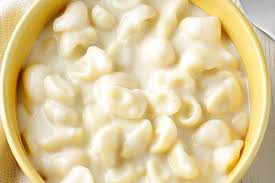
Uh-Oh. The Macaroni and Cheese Is Out Of The Bag At Panera


The Big “Secret” Is Revealed

The Internet exploded the other day when a now former Panera Bread employee apparently “revealed” the anything-but-secret secret about how the fast casual chain prepares and serves its signature macaroni and cheese.

In a brief clip filmed behind the counter and later uploaded to Tik Tok, the employee is seen dipping a plastic bag full of frozen macaroni and cheese into a pot of hot water and then pulling it out and emptying the steaming contents into a bowl for service.

I don't know, but I'm guessing the reason behind this attempted “outing” was to cause some kind of embarrassment to Panera, an outfit that prides itself on its fresh, all-natural fare. It's like “lookee-lookee! Their fresh macaroni and cheese is frozen!!”

Excuse me while I stifle a yawn.

If this myth-busting Snopes wannabe is expecting me to pick up my picket sign and go protest in front of my local store, she's going to be sadly disappointed. See, with four generations of family and numerous friends in the food service business, I know a little something about how it works and this is far from a secret or a surprise.

What? Did you really think there was a Michelin-starred chef in a white jacket and a toque just standing back in the local Panera kitchen waiting to make a single serving of your favorite side dish fresh to order? That he was cooking each individual portion of pasta one at a time and making the creamy cheese sauce from scratch so he or she could pour it over your dish when it was ready to hit the window? Reality check time. That ain't the way it works at Panera, Olive Garden, Red Lobster or just about any other high-volume chain restaurant you can think of.

And it ain't the way it works in my kitchen either. I've got freezers jam packed with goodies that I did, indeed, craft from high-quality, super-fresh ingredients that I then portioned out, vacuum-sealed, and stuck in the freezer for later use. There's absolutely nothing wrong with that. It's common industry practice. A chef, Michelin-starred or not, working in a corporate kitchen somewhere, developed the recipe. The high-quality, super-fresh ingredients were assembled and prepared according to the chef's standards and under his or her supervision. Then the results were portioned and quickly frozen in order to maintain that fresh quality without having to add a ton of preservatives. I do it commercially for my clients, I do it at home for my family; it's no big deal. C'mon! Have you never made too much of something and wound up freezing part of it and eating it later? Was there anything wrong with it when you did? Of course not.

Trust me, I've had cooks in my restaurants who just loved to “play” with my recipes. Add a little of this, leave out a little of that. You know, “personalize” it. Can you imagine what would happen if every barely above minimum wage cook in every Panera Bread restaurant across the country were allowed to make the macaroni and cheese “their way” from scratch? Even if they “followed the recipe,” it wouldn't taste the same from one location to the next and you wouldn't be happy, now would you?

I remember eating at a chain place years ago where the cooks apparently had a little leeway in the preparation of certain things. As a result, I got a Fettuccine Alfredo that had enough nutmeg in the sauce as to render it not only unrecognizable but also inedible. And you know what? I've never been back to any location of that chain from that day to this.

Creativity is fine for fine dining, but when it comes to chain places, consistency is key. Customers expect the macaroni and cheese at the Panera in Kookamunga to taste the same as the stuff they had in the store down the street. If the cook in Kookamunga likes, let's say nutmeg, and is given free rein to prepare the dish “his way,” they're going to have a very dissatisfied customer. So yeah, they make the stuff in big batches and freeze it. So what?

As a Panera spokesperson told CNN, “Mac and cheese is made off-site with our proprietary recipe developed by our chefs and using our sourced ingredients that meet our standards for our clean menu offerings,” adding that the meals are shipped frozen so the company can leave out certain preservatives that don’t meet the chain’s clean standards.

Technically, what they're doing at Panera is a form of the very trendy and popular “sous vide” method of cooking. It's actually the best way for a restaurant – or anybody, for that matter – to reheat macaroni and cheese from a frozen or refrigerated state. Tossing it in a pan on the stove or letting “Chef Mic” (industry speak for a microwave) do it usually turns out badly. Heating the product in a gentle, temperature-controlled water bath brings it up to serving temperature gradually while ensuring that the sauce stays emulsified with no breaking or scorching. Again, consistent quality counts.

By the way, have you ever wondered how some high-end steak places can produce such consistently killer steaks in such short periods of time? Pssst.......sous vide. Everybody does it.

I guess somewhere just south of a hundred-thousand people – probably more by now – thought the little clip was newsworthy. And apparently Panera thought that the budding videographer's talents were best applied elsewhere. Seems the pasta wasn't the only thing in hot water around there. So now she's on Tik Tok crying salty tears about having been canned, essentially for trying to make her employer look bad. Boo-hoo! Sorry, you're lucky they didn't sue you.

You know, I'm a sucker for good macaroni and cheese and I've never tried Panera's. I can vouch for their soups and sandwiches but maybe it's time I branch out a bit. Hmmmm.....it is lunchtime and there is a Panera Bread store not far from here. Yeah, I think I'll do that. After all, I ain't afraid of no hot water. Care to join me?

Thursday, December 7, 2017

They Used To Give Pizza Away Because Nobody Knew What It Was

Enjoy Your Slice!

Pizza is everywhere. You can't sling a ball of fresh mozzarella anymore without it landing on a pizza of some kind. And what kinds there are! These days it seems you can take anything from anchovies to zucchini, slap it on flatbread, and call it a pizza. (Squid are big in Japan and they like coconut on pizza in Costa Rica.) In fact, in some places if you order a pizza with just the traditional elements – tomato sauce and cheese – you get funny looks and they ask if you're sure that's all you want. Like there's something wrong with a cheese pizza.

I hope you're sitting down because I'm going to reveal something shocking: I never ate pizza as a kid. Me. The part-Italian guy. It wasn't in my mother's wheelhouse so I never had pizza until I was in my early twenties. When I was in high school, Mom and I used to go to Pizza Hut every week – for spaghetti! (Hey, don't judge. It was the '60s, okay?) And the first pizza I ever had was really awful. I was dating a girl who innocently made a pizza from a box mix. It was not an auspicious introduction, to say the least. It was a couple of years later before I tried pizza again. This time, the girl I was seeing suggested we go to Pizza Hut, not for the spaghetti, but for actual pizza – or at least as close to it as Pizza Hut gets. I found it to be way better than the box mix and I was hooked. The relationship with the girl may have fizzled, but my relationship with pizza sizzled and I became a devotee and student of the art not only of eating pizza but of crafting it as well. My Italian roots finally surfaced and I live in a whole different world of pizza today. There's even pizza that's out of this world. Check out the YouTube video circulating of astronauts making vaguely pizza-like things on the ISS.

But there was a time in the not too distant past when Italian pizza makers in America had to give their wares away because American customers simply didn't know what it was. È vero!

Some form of toppings on flatbread has been around in Italy since Roman days. The introduction of tomatoes to the peninsula in the the sixteenth century helped shape the form into the familiar “pie” we know now; the one that was perfected in Naples in the nineteenth century and brought to America by immigrants in the early twentieth.

Break for a quick Italian lesson: have you ever seen the name of a place that serves pizza spelled “pizzaria?” I have, and it's wrong. “Pizza” is a singular noun. And unlike English you don't pluralize something in Italian by tacking on an “s.” The correct plural of “pizza” is “pizze.” The word “pizzas” does not exist in Italian. And since a place that sells pizza usually sells more than one, it is properly spelled “pizzeria.”

The country's first pizzerie (there's that correct plural again) opened on the East Coast shortly after the turn of the century. Lombardi's has been acknowledged by the Pizza Hall of Fame as the first pizzeria in the United States. An immigrant named Gennaro Lombardi started up a grocery on Spring Street in Manhattan in 1897. He converted it into a pizzeria in 1905 and history was made. A place called Papa's Tomato Pies set up shop in Robbinsville, New Jersey in 1912. Under the ownership of a former Lombardi's employee,Totonno's popped up in Brooklyn in 1924. Frank Pepe's in New Haven made the scene in 1925 and introduced the world to White Clam pizza. And Regina Pizzeria moved pizza westward a bit when it opened in Boston's North End in 1926. Tacconelli’s Pizzeria, in Philadelphia's Kensington neighborhood, opened as an Italian bakery in 1921, but Giovanni Tacconelli saw the writing on the wall in 1945 and started turning out pizza to satisfy the appetite of returning WWII GIs who acquired a taste for it while serving in Italy.

All these places existed in Italian neighborhoods and primarily served Italian immigrant clientele. The real test came when pizza entered the Midwest and the South.

I grew up in the Midwest: specifically, between Milwaukee and Chicago. There were Italian enclaves in both cities. In Milwaukee, it was the Third Ward, nowadays an upscale artsy neighborhood but a ghetto recently vacated by the Irish and left to the Italians back in the day. The Caradaro Club on Erie Street was Milwaukee's first pizzeria. Conceived by John Caravella and Joe Todaro, when it opened in 1945, it didn't actually serve pizza: it was one of the up and coming Italian restaurants that were gaining post-war popularity by featuring lasagna and spaghetti. Pizza? What's that? The locals couldn't even pronounce it. They called it “pissa pie” among other weird variations. But they had no idea what it was. A recipe of sorts was featured in a 1937 Milwaukee Journal article about Christmas breads. Columnist Jean Templeton wrote, “The day before Christmas is a fast day for Italian families, so they make a bread named pizza.” And there followed a recipe for a sort of dough that would be “spread into a shallow pan or deep baking sheet. … Over the top sprinkle chopped tomatoes … anchovies, onions and grated Romano cheese.” Yummy, huh?

So when the Caradaro Club decided to put pizza on the menu, it was a tough sell at first. In fact, they didn't “sell” it at all; the owners gave it away to restaurant patrons and sometimes even passed out samples on the street. “Here try this,” they would say to some unsuspecting local. “What is it?” “It’s pizza.” It took about six months before pizza caught on and the restaurant actually started putting a price on it.

Down in Chicago, an Italian food and wine merchant named Anthony Paterno, a Sicilian immigrant who came to the Windy City by way of Brooklyn, opened what is believed to be the city's first pizzeria on Grand and Western Avenues in 1938. A few years later, in 1943, a former University of Texas football star, Ike Sewell, and his friend, Italian immigrant Ric Riccardo, opened a place in the River North neighborhood they originally called The Pizzeria. They later changed that to Pizzeria Riccardo and, when they opened a second location nearby, the original became Pizzeria Uno and the new place was called Pizzeria Due. Clever, right? Sewell actually wanted to open a Mexican restaurant in the beginning but it's been said that when Riccardo got his first mouthful of Mexican food, that idea quickly went by the wayside. Anyway, both Sewell and Riccardo and former Uno employee Adolpho “Rudy” Malnati, claim to be responsible for that heavy tomato casserole that masquerades as pizza under the name “Chicago-style Deep Dish.” I'm not sure if they had to give it away at first, but I'm certain more than a few people asked “What is it?” when faced with the new creation because it sure didn't look like pizza. (Yes, I'm a snob and a purist. So sue me.)

Okay, so obviously cities with a big Italian presence got aboard the pizza bandwagon fairly early. But what about places like Columbia, South Carolina? While the city had its share of Italian immigrants, it didn't exactly have an Italian-American “community.” What it did have, however, was Fort Jackson, the largest US Army training base east of the Mississippi and temporary home to lots and lots of Italian and Italian-American trainees from the big northern towns. Enter James and Sadie Tronco. James was sent from his native Philadelphia to serve as a WWI medic at then Camp Jackson. He met and married a local girl and moved back to Philly before returning to Columbia in 1930. They opened a fruit store downtown, but Sadie started cooking up spaghetti and meatballs for those hungry, homesick Yankee Italian soldiers out at the fort. The fruit store morphed into South Carolina's first Italian restaurant, a place originally called Tony's Spaghetti House and now known as Villa Tronco. And Sadie, aka “Mama Tronco,” laid claim to being the one who first introduced pizza to the capital city. And again, she initially found herself giving it away because no one other than the Italians from the fort knew what it was.

It is often said that servicemen returning from Italy were responsible for the burgeoning popularity of pizza in the post war years. But believe it or not, comedian Milton Berle also had a hand in it. Host of NBC's Texaco Star Theater from 1948 until 1955, Berle, known as “Uncle Miltie” and “Mr. Television,” was America's first major TV star. His influence was vast and when he occasionally spoke of “going out for a pizza after the show,” millions of ordinary viewers who had never been near Naples or Salerno during the war asked themselves, “What's a pizza?” and then they set out to find one. As a result, mom and pop pizzerie bloomed like wildflowers across the American food landscape throughout the '50s and '60s. For example, my little Midwestern hometown was populated by 5,856 people in 1960 and was served by not one but two pizza shops. A guy named Lawrence Marino opened the first one in 1955 and Luigi Petracchi started up the other one in 1957. The Natale family added a third pizza restaurant to the area in 1963. This was typical all over the country until (dah-dah-DAH!) chain stores like Pizza Hut (Wichita, Kansas, in 1958), Pizza Inn (Dallas, Texas, in 1958), Little Caesar's (Garden City, Michigan in 1959), and Dominos (Ypsilanti, Michigan, in 1960) started chipping away at the market. (Papa John's came late to the party; Jeffersonville, Indiana in 1984.) That market was further eroded by the Celentano brothers and by Rose and Jim Totino who started commercially producing frozen pizza in 1957 and 1962, respectively.

But fear not, pizzerie are not dead. There are about seventy thousand of them operating in the United States today, only one in four of which is a Dominos, Pizza Hut, or Papa John's. In fact, seventeen percent of all restaurants in the United States are pizzerie. More than ten percent of America's pizzerie are found in New York City. And eighty-three percent of American pizzerie currently offer delivery.

Nowadays, Americans consume an estimated three billion pizze every year. At least, that's the number sold; which doesn't account for people like me who make our own. Ninety-three percent of us will eat pizza at least once in the next thirty days. (I'll be eating mine in the next thirty minutes, thank you.) And the average American eats twenty-three pounds of pizza annually. (Boy, am I above average!) That's a far cry from the days just seventy or eighty years ago when pizza purveyors had to give the stuff away! The closest thing to a pizza giveaway in recent memory was when Lombardi's celebrated their one hundredth anniversary in 2005 by selling a whole pizza for the original price of five cents.

So there you have it; a little American pizza lore with which to amaze and baffle your family and friends while you're waiting for your server, your delivery person, or your oven to provide you with your share of the estimated one hundred acres of pizza Americans will consume today. Enjoy your slice of the pie!  

Friday, April 22, 2016

A Culinary Education: Do You Really Need Culinary School?

I'm $100K Richer And I Can Still Make Risotto With My Eyes Closed

As an adjunct to our catering/personal chef service, we occasionally conduct cooking demos or “classes” for interested people in the community. We recently mentored a young person who expressed an interest in attending Johnson and Wales for a culinary education in pastry. That's great and we certainly don't discourage it, but it brings up the question of what exactly constitutes a “culinary education?”

I have a “culinary education.” It started more than fifty years ago when, at age seven, I mounted a step-stool in front of my mom's stove and learned how to cook bacon. By the time I was ten, I had added poached and scrambled eggs, grilled cheese sandwiches, boxed macaroni and cheese, instant mashed potatoes, frozen French fries, and Minute Rice to my expanding repertoire. I look back now and say, “Oh my god! Minute Rice?” But hey, it was the sixties. That was as close to scratch cooking as we came in those days. I can do a little better now. The point is I took the initiative to learn. And I've never stopped learning. A “culinary education” is never complete.

I demur a little when I'm introduced as a “chef.” I guess I qualify in the most liberal sense of the word because, yes, I can cook, I can create a menu, and I can supervise the running of a kitchen. And I bill as a “personal chef” because there's no such industry title as “personal cook,” although it would be a more accurate representation. I didn't go to culinary school. I am entirely self-taught. Like a lot of professionals, I started out as a teenager, busing tables and washing dishes. I had grandparents and aunts and uncles in the restaurant business and a mom who had the talent be a professional cook even if she wasn't one. With the notable exception of my ten-thumbed father, everybody in my family cooked and cooked well. So I had a lot of excellent teachers. And I carried on the family tradition: both of my sons can cook. When they were growing up, their mother was a multiple award-winning biscuit baker for a national fast food franchise. My older son was turning out scratch-made cakes when he was ten and he is now a successful restaurant manager, having worked his way up from McDonald's and through stints as a waiter and as a line cook. He never set foot in a formal classroom, but I'd say he has a fairly good “culinary education.”

The traditional European model for a “culinary education” is based on apprenticeship. Even the world's first “celebrity chef,” Marie-Antoine Carême, started out as a kitchen boy in a cheap Parisian chophouse. His heir apparent, Auguste Escoffier, began his celebrated career working as an apprentice at his uncle's restaurant in Nice at age thirteen. Jacques Pepin, Wolfgang Puck, and Heston Blumenthal are just a few of the many current European chefs who have no “formal culinary education.” But if you count the awards and the Michelin stars they've accumulated, you'd have to admit they've done okay without one.

Culinary schools are a relatively new phenomenon in the United States. In the 1870s, the Women's Educational Association of Boston created the Boston Cooking School, America's first school dedicated solely to a culinary education. You may recognize the name Fannie Farmer, one of the school's top students who later became its director and gained worldwide acclaim for her work on “The Boston Cooking-School Cook Book,” most often called “The Fannie Farmer Cookbook,” still in print and still in demand today.

There are currently about five hundred cooking schools of one sort or another in operation in the United States. One of the more famous, the Le Cordon Bleu school, modeled after the historic institution of the same name that opened in Paris in 1895, recently announced that it was shuttering all sixteen of its American campuses. According to Eater.com, “Le Cordon Bleu and other culinary institutes in the U.S. have come under increasing scrutiny for their outrageous tuition costs, high drop-out rates, and dismal job prospects. Eater analyzed the data this summer and found overwhelming evidence that culinary school isn't worth it. These for-profit centers have even been sued for their deceptive recruiting tactics and falsified rates of post-school job placement. Career Education Corporation [Le Cordon Bleu's parent company] settled one class action lawsuit from former students to the tune of $40 million.”

Now, if you want to talk about bang for your buck, consider this: a formal culinary education can set you back as much as $100K for a full four year program. That equals about twice what a graduate can expect to make, assuming they land a top job as an executive chef at a high end restaurant, a position that yields between $50K and $60K per year. If they don't quite make the top spot, they can expect to rake in between $35K and $40K as a sous chef. My young student can figure on slightly less, about $32K, as a pastry chef, and if a culinary grad winds up working the line, they'll get by on somewhere around $25K per year.

The biggest problem facing the industry right now is that prospective culinary students watch too much TV. They all want television contracts handed to them along with their diplomas so they can all be the next Bobby Flay. And it just doesn't work that way. None of them want to start in the trenches. They expect to start at the top. They blow $100K on an education that will net them $25K, if they're lucky, and often wind up walking away from the industry bitter, disillusioned, and deeply in debt.

The funny part is that most food service jobs don't require a degree of any kind. Check your newspaper listings: “experienced line cook wanted,” “hiring experienced sous chef,” “looking for experienced cook.” So go ahead and show up in your starched whites with your shiny blue ribbon diploma, but be aware that the grubby guy who's been prepping veg in a restaurant basement for the last four years probably has a better shot at the job than you do.

So what, exactly, do they teach you at culinary school? Technique. Lots and lots of fancy French technique. You'll be able to brunoise and julienne with the best of them after graduation because you'll be schooled and drilled in prep technique until you can do it in your sleep. You'll also learn more about butchery than you ever thought you'd need to know. Not only will you be able to efficiently hack your own steaks from a side of beef, you'll be able to disassemble a chicken blindfolded. You'll become proficient at sauces after they hammer the Mother Sauces and their derivatives into your skull. Same goes for making stocks. You'll learn the importance of mise en place, French for “everything in place,” an absolutely essential concept that stresses the necessity of organization throughout the cooking process. And you'll learn tips and tricks to enhance your creativity. But be aware: like acting, singing, dancing, and other creative endeavors, cooking is both a skill and an art. If you have raw talent and natural ability, going to culinary school will develop and enhance it, enabling you to attain greater success in the field. If, however, you simply suck in the kitchen, you'll still suck after cooking school, except you'll have the added burden of being broke. Star Trek's Jonathan Frakes once told me his acting degree (a BA from Penn State) was just an expensive piece of worthless paper. Either you are an actor or you aren't. Going to acting school won't turn somebody with no talent into an actor. Neither will going to cooking school make a chef out of a person who can't boil water. They might be able to pound enough technique into such a person as to enable them to function in a kitchen, but the art part, the creative process necessary to be truly successful, simply can't be taught.

So, do you really need to impoverish yourself (or, more likely, your parents) and mortgage your firstborn in order to acquire a decent, functional “culinary education?” Not really. Witness the aforementioned Pepin, Puck, and Blumenthal. Add Thomas Keller to the list. And Tom Colicchio. And Jamie Oliver, Gordon Ramsay, Jose Andres, and the late Charlie Trotter. Ina Garten didn't go to culinary school and neither did Rachael Ray, but it doesn't seem to affect their TV ratings or earning potential. Many chefs, like Mario Batali, gave culinary school a shot, but dropped out. Not because they couldn't hack it, but because they found it too structured and limiting. Batali advises young people to “attend college while cooking in high-end restaurants; after graduating you'll have enough experience you won't need to go to culinary school.”

I say again, I'm not a “chef.” And I don't want to be one. I'm a very good cook and that's good enough for me. I can more than function at home cooking for friends and family and I can hold my own in my somewhat limited professional capacity. I don't cook with rarefied ingredients that I can't pronounce, but I defy you to beat my lasagne. When faced with a side of beef or pork, maybe I don't have the chops to break down my own chops, but I do know a great butcher and I can still strike fear into the hearts of chickens. I may not be as fast or fancy with my knife skills as a Le Cordon Bleu student, but my strip cuts and cube cuts are just as good thanks to the free “Knife Skills” class I went to at a nearby kitchen store and the follow-up online course I took for twenty dollars. The fifty bucks I spent on a “Basic Sauces” course at a local cooking school taught me everything I need to know to turn out a bechamel as well as any Johnson and Wales grad. Give me some herbs and aromatics and a chicken carcass and I'm your stock man. Learned that one on You Tube or someplace. Marcella Hazan taught me a kick ass tomato sauce – or at least one of her cookbooks did. Harold McGee's On Food and Cooking is a bible to nearly every professional chef. I have an autographed copy that Dr. McGee signed after I drove halfway across the state and shelled out a few bucks to sit in on one of his presentations. Amazon and my local bookstore are loaded with textbooks from the CIA and other institutions and my kitchen is as good a place to study them as theirs is. In fact, I've spent hundreds of hours studying with some of the most noted Italian chefs in the world. My extensive instruction at the hands of Mario Batali, Lidia Bastianich, Michael Chiarello, Giada De Laurentiss, Mary Ann Esposito, Rocco DiSpirito, David Rocco, and a host of others didn't cost me any more than the price of basic cable. I'm $100K richer and I can still make risotto with my eyes closed. And, of course, I've spent years learning from the very best: my mom, my grandmother and a host of family and friends in home and restaurant kitchens everywhere. So, am I a formally trained and educated “chef?” No, but I sure as hell can cook.

Bottom line, if you've got the talent, the dream, and the drive, but not the big bucks, here's how to make it in the food business without culinary school:

  1. Have passion. If you don't eat, sleep, and breathe food, don't bother. You can't half-ass it or make cooking a part-time hobby.
  2. Get your act together. Figure out where you want to go. Classic French, Italian, Hispanic, Asian, American, or wherever your passion leads. Then gather your resources and get into it. I am part Italian, but the only “foreign” language I was exposed to as a kid was French. It's a long story. But when I decided that Italian food was my passion, I boned up on Italy and learned Italian in order to better understand that culture and its cuisine.
  3. Study. Everything. Cookbooks, food magazines, local classes, online courses. Don't overlook the value of TV cooking shows. Just ignore the dreck and drivel that Food Network puts out and find some real cooking shows on PBS. You might still learn a little from some of the less egregiously stupid network shows like Chopped or Top Chef, but don't waste your time with the vast desert of idiotic food-themed game shows that the chowder heads at Scripps seem to think represent America's taste. Work especially on technique: that's 90% of a “formal” culinary education. Seek out knife skills classes and technique classes pertinent to your particular passion. Take a food safety course. Restaurants snap up ServSafe certified people practically on sight.
  4. Find a kitchen. Unless you just want to be a better home cook, at some point you're going to have to venture out into the bigger, badder culinary world. And, for cryin' out loud, be realistic in your expectations. Unless you're a real prodigy, you're not going to waltz into a fancy restaurant after watching Bobby Flay cook a steak on TV and land a head chef job right out of the box. Don't be afraid to be a dishwasher. I did it. I also hated it, but it got me exposed to a professional kitchen environment at an early, formative stage. Just being around a kitchen when I was a kid helped me understand what I was getting into. Wait tables. A lot of European culinary programs make their trainees work both sides of the house. Again, you may not be cooking, but you'll increase your food knowledge. Offer to stage (stazh) or apprentice in a local restaurant kitchen. Free labor for them, free education for you. Win-win. And once you land that kitchen job, work your ass off. Reality check: not every kitchen is “Hell's Kitchen,” but every kitchen is hot, sweaty, grueling, repetitive, and prone to long hours with short breaks and endless cycles of high-pressure intensity alternating with periods of mind-numbing boredom. Get used to it. Don't bitch and complain. You'll get marked as a whiner and made to suffer for it accordingly. Just keep your head down and chop the veg, stir the sauce, scale the fish, flip the burgers, sear the steaks, and......
  5. Don't Ever Stop Learning. Guess who learned something new today? Me. And I've been cooking for more than a half-century. Check your ego at the kitchen door because you will never know it all. Cuisines evolve, techniques change, equipment improves, innovations abound every day. And if you don't keep up, you'll be left behind. If you ever reach the point where you're no longer challenged, where you no longer care to be creative or innovative, where cooking no longer excites you or stirs your passion, just hop on the first delivery truck that pulls up to the back door and ask them if they need a driver.
Okay, now that I've pointed you in the right direction and saved you thousands of dollars, go out and get a job. Open a nice Italian restaurant. And if you look through the pass someday and see some cranky, gray-haired old fossil giving your waitstaff a hard time for mispronouncing “marinara” and “bruschetta,” just step out and shake my hand and say, “thanks.”

Wednesday, March 2, 2016

Hooray for Chick-fil-A and the “Cell Phone Coop”

An Idea Whose Time Has Come – Unfortunately

I'm old. And every day I feel a little older. No, I'm healthy, wealthy, and wise enough.......well, two out of three ain't bad. That's not the problem. What makes me feel old is living in a time in which we actually have to tell people things like the fact that it's not safe to text and drive. Imagine my best creaky, cranky Grandpa voice here: “In my day, people were smart enough to know that you can't write a letter and drive a car at the same time.” Young whippersnappers! Today, not only do you have to tell people basic common sense stuff like that, but you actually have to convince them of its veracity! It boggles the mind and makes me wonder where we, as a society, are headed. Of course, I've been wondering that since the first label I read on a frozen pizza that said, “Cook before eating.” Or the one on the back of the cardboard windshield sunscreen that said, “Remove before driving.” Signs of the times.

Now fast food chicken chain Chick-fil-A has hatched an idea whose time has come – unfortunately. I say “unfortunately” because it is a sad reflection on modern times that such an idea has even to be conceived, much less implemented. “Why, in my day.......” Oh, never mind.

A franchise operator in Georgia got a little concerned when he noticed that families were coming into his restaurants firmly attached to their cell phones. Look around; you'll see it every day. Families and groups of friends go to a restaurant, order their food, pull out their phones, and proceed to totally ignore one another. And that's not the way it's supposed to be. Eating together is supposed to be the ultimate act of communion. Why do you think churches use that word for the sacramental sharing of bread? You come together to eat, to share, to converse, to commune. You're not supposed to sit there with your nose stuck to a screen checking Facebook or playing Candy Crush. You're there with other people. Be a person, for gawdsake, not just an organic extension of an electronic device. Why do you find it necessary to “connect” with a “friend” on the other side of the planet when you can't connect with the one sitting on the other side of the table? And why do old people like me have to explain that? “Back in my day.......”

Anyway, this Chick-fil-A franchisee came up with a plan to combat this rampant cybertronic isolation. He invented what he calls the “Cell Phone Coop.” Basically, it's a cardboard box, dressed up with printed chicken wire, that sits on the table. The front of the box says, “Chick-fil-A Family Challenge.” Printed on the sides are the instructions: “How the Challenge Works: 1. Turn all family cell phones to silent and place in this cell phone coop. 2. Enjoy your Chick-fil-A meal and each other distraction free. 3. After the meal, let us know that you have successfully completed the challenge and each of you will receive a small Icedream cone.”

"We really want our restaurant to provide a sense of community for our customers, where family and friends can come together and share quality time with one another," Georgia operator Brad Williams explains.

The idea has caught on. Williams estimates that about ninety percent of customers who attempt the "cell phone coop challenge" are successful. A few fall short. He cites the example of the family who tried the challenge but failed when one of the kids just had to send a text during the meal. But the father assured him the family would return the following week and try again. And the concept has spread within the chain. At last count, nearly two hundred Chick-fil-A locations around the country have embraced the cell phone coop.

The notion of paying people to stay off their damn phones for a few minutes is not entirely new. Some restaurants have long offered discounts to patrons who leave their devices at the door. Other establishments just appeal to a rapidly disappearing sense of etiquette and propriety by posting signs asking diners to turn off or silence their phones. Pandering to greed is usually more successful.

And that's strange because a recent Pew Research survey indicates that only thirty-eight percent of respondents approve of cell phone use in restaurants. Meaning that sixty-two percent of old fuddy duddies like me think such behavior is crass and ill-mannered. And yet the problem persists.

So, inasmuch as I believe it to be a sad reflection of the times in which we live, I suppose the societal reeducation process has to begin somewhere and if it requires outright bribery, whether through discounts or desserts, then so be it. Hooray for Chick-fil-A. May their coops remain full and their Icedream machines empty.

Now let's see if some enterprising movie theater operator can come up with a similar scheme.

Wednesday, February 3, 2016

Forget About McDonald's Mozzarella Sticks And Make Your Own

Channeling Clara Peller: “Where's The Cheese”

The food world came to a crashing halt recently as word spread across the Internet that McDonald's newest menu addition – fried mozzarella sticks – apparently didn't contain any actual mozzarella. Scores of photos of breaded shells devoid of cheese popped up everywhere, leading to the question, “Where's the cheese?” If a competitor wanted to be really canny, said competitor could revive Wendy's old “Where's the Beef” gimmick with a cheesy twist. Of course, dear old Clara Peller has long since departed for that Great Fast-Food Restaurant in the Sky, but, hey, if the Madison Avenue types can resurrect Colonel Sanders for a modern ad campaign, why not the “Beef” lady?

The controversy has grown to such proportions that a guy in California has actually filed a class-action lawsuit seeking 5 mil in damages, accusing the Chicago-based burger meisters of fraudulent and misleading advertising. According to the claim, some 3.76 percent of the cheese portion of the sticks in question is actually starch filler. Federal guidelines reportedly prohibit the use of starch in products that are labeled "mozzarella cheese," hence the basis for the fraud charge. Like somebody actually expected McDonald's to use mozzarella di bufala?

My wife and I stopped by a local Mickey D's and ordered a couple of orders of the offending side item and found them to be just average old mozzarella sticks of the variety available at cheap faux-Italian restaurants everywhere. Served with a little cup of unremarkable marinara, they were pretty standard fare, and, yes, there was cheese in both orders. Although I do understand the phenomenon; I've gotten empty sticks at other places on occasion.

Two things come into play: the quality of the product and the ability of the cook. I haven't been back in the kitchen, but I can almost guarantee that McDonald's does not have a little Italian nonna back there hand breading hand cut batons of fresh mozzarella. No, it's more likely that they are frozen sticks of heavily breaded cheap cheese product and it's equally likely that they are being fried to within an inch of their existence, which is another reason the cheese would cease to exist. In addition to the California dude's probably correct assertion that the “cheese” in McDonald's sticks leaves something to be desired, the real problem is that the skills of the people frying them also leave something to be desired. Quickest way to bust a mozzarella stick wide open is to overcook that rascal. Even so-called “low moisture” cheese has some moisture in it, and what happens when water/moisture hits the boiling point? Steam, of course. Considering that the average boiling point of water is about 212° and that the average temperature of frying oil is upwards of 350°, it doesn't take a rocket scientist to figure out that explosive steam expansion is gonna happen if you throw something wet into the fryer and leave it there for several minutes. You wanna know where the cheese in the cheese sticks winds up? Check the fryer filters.

Anyway, I've got a better solution. Forget all that angst on Instagram and don't rush headlong to join that cheesy lawsuit. Instead, just make your own fried mozzarella, or mozzarella fritta, as it's called in Italian. It's really not that hard and the results are a darn sight better than any you'll find at McDonald's or at most of the aforementioned faux-Italian places. Here's how you do it.

You'll need:

Mozzarella cheese
Flour, seasoned with salt and pepper
Eggs
Bread crumbs
Oil for frying

If you can find fresh mozzarella, great. Otherwise, the typical block cheese found in supermarkets will work.

You can use Italian breadcrumbs if you want to zip up the flavor a little. Otherwise, plain breadcrumbs are fine.

Use a neutral oil like canola for frying.

The method I'm about to describe assumes that you'll be shallow frying in a frying pan or a Dutch oven. I actually have a deep fryer, but I know not everyone does. A fryer makes this a quicker and easier process, but pan frying works just fine.

Okay, here's what you do:

Cut the mozzarella into slices or sticks about 1/2 inch thick. Slices work better with fresh cheese because it comes in rounds. The block cheese makes for better sticks. Your choice. Whichever way you go, pat off any excess moisture with paper towels, especially if you're going with fresh mozzarella.

Heat some oil in a deep, heavy-bottomed pan. A cast iron skillet is good; so is a Dutch oven, especially the ceramic coated cast iron ones like those made by Lodge or Le Creuset. You don't need quarts of oil; just enough to completely immerse the cheese sticks. You want your oil to hit a temperature of about 350°. If you don't have a thermometer, and old trick is to drop a crumb of bread into the oil. If it sizzles immediately, the oil is ready.

While you're waiting for the oil to heat, lay out three shallow bowls. Beat the eggs in one. Put some flour in another and some breadcrumbs in the third. This is called a “breading station.” The order for breading just about everything can be remembered by thinking of the abbreviation for February: F-E-B – flour, eggs, breadcrumbs. (There's your Cooking 101 tip for the day.)

Press the cheese slices or sticks into the flour, coating them evenly. Shake off any excess flour and dip the sticks or slices into the eggs, then into the breadcrumbs. Now go back and hit the eggs again and take one more dive into the breadcrumbs. This provides a nice double-coated breading that will hold up better in the high-temp frying conditions.

Working in small batches, carefully add the breaded cheese to the oil. Fry just until golden brown. About a minute will usually do it. Watch closely; if they sit too long, you might as well pack up and go to McDonald's. If you're not using a deep fryer, turn the sticks once while frying to ensure even cooking on both sides. Fish the sticks or slices out with a slotted spoon or similar utensil and drain them on paper towels. Serve 'em up hot, fresh, and delicious.

A little time saving variation here: you can prepare your mozzarella sticks in advance and freeze them for later use. Just lay out your prepared cheese sticks on a wax paper lined baking sheet. When you get a sheet full, cover them with plastic and stick them in the freezer for a couple of hours. Once they're frozen, you can remove them to zip top freezer bags and keep them frozen for a day or two. Don't hold them too long, though: if they build up ice crystals, they'll fry up about the same as the cheap store-bought sticks – or the things they use at McDonald's. Fresh is best, overnight is okay, more than a day or so and you're pushing quality.

There you have it; mozzarella sticks guaranteed to have cheese in every bite.

Buona fortuna e buon appetito!