Pages

The View from My Kitchen

Benvenuti! I hope you enjoy il panorama dalla mia cucina Italiana -- "the view from my Italian kitchen,"-- where I indulge my passion for Italian food and cooking. From here, I share some thoughts and ideas on food, as well as recipes and restaurant reviews, notes on travel, a few garnishes from a lifetime in the entertainment industry, and an occasional rant on life in general..

You can help by becoming a follower. I'd really like to know who you are and what your thoughts are on what I'm doing. Every great leader needs followers and if I am ever to achieve my goal of becoming the next great leader of the Italian culinary world :-) I need followers!

Grazie mille!
Showing posts with label Food History. Show all posts

Friday, June 27, 2025

Does Hot Food Need To Completely Cool Before Being Refrigerated?

It's All About Time and Temperature
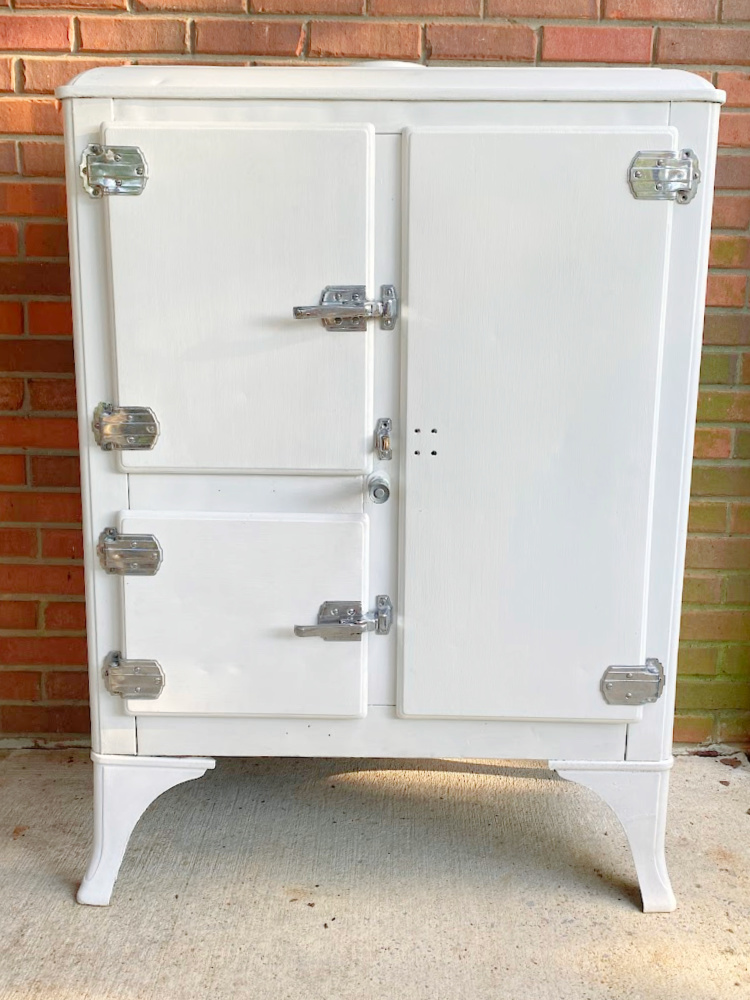
Okay, tell me if you've heard this one: “You can't put that in the refrigerator. It's too hot. It has to cool down first.” Of course you have. If you're like me, you've probably heard it from your mother who heard it from her mother, who heard it from.....and so on, all the way back to the days of the “ice box.”

But does hot food really need to “cool down” before you put it in the fridge? The answer is a qualified “no,” with the qualification being the definition of “hot.”

Obviously, you're not going to take a casserole or something right out of a 350° oven and put it directly into the refrigerator. Condensation becomes an immediate issue, to say nothing of the risk of the thermal shock that would most likely occur should you take said 350° dish and place it directly on a 40° glass shelf, which most refrigerators have these days. Bad idea all the way around.

The other concern – that of raising the temperature inside the fridge – goes back to the days of the aforementioned ice box.

Ice boxes were just that: insulated double-walled wooden or metal boxes into which blocks of ice were inserted for the purpose of cooling food and/or beverages. The insulation consisted of straw, sawdust, cork, and sometimes even fur stuffed into hollow spaces between the walls of the boxes. Since pretty much everybody knew even then that warm air rises and cold air falls, large blocks of ice were placed in compartments located at the top of the box. The cold – well, cooler – air would sink downward, thus somewhat cooling whatever was inside the box. Of course, even well-insulated ice eventually reverts to its liquid state, so drip trays were located at the bottom of the box. These trays had to be emptied at least once a day, more often in hot climates or in hot weather.

The first commercially successful electric refrigerator came about in 1927. (An older model, introduced in 1910 and called the “Dumbbell”, failed to catch on largely because it cost $1,000 in a time when Joe Average made less than $500 a year.) Made by General Electric and called the “Monitor-Top,” it was an improvement on the old-fashioned ice box. But just barely.

Based on a concept developed by French inventor Marcel Audiffren, the Monitor-Top employed the same basic design as an ice box, except it had an electric compressor perched on top of the box instead of an ice tray. The compressor distributed coolant through a hermetically sealed system, so no more emptying drip trays. Unfortunately, early units often utilized toxic gases like sulfur dioxide, methyl formate, ammonia, or propane as coolants. And they really weren't all that cool.

If you put a fifty pound block of ice in the top compartment of an ice box, the upper portions of the box would cool to around 52 to 54 degrees, while the lowest part might get down as low as 42 to 44 degrees. The new-fangled electric models maintained about the same temperature levels. They were just more consistent about it since there wasn't any melting of the primary coolant involved. Basically, they were just big electric coolers. Freezer compartments were still a few years in the future.

And so it began: “don't put anything hot in the ice box,” as my grandmother still called it well into the 1960s, “because you'll warm up the inside of the box and everything in it will spoil.” That was true in 1925. Not so much a hundred years later.

Modern refrigerators are light years ahead of their predecessors in terms of overall design, construction, materials, compressor power, coolant, insulation …everything...and they can pretty much handle it when you stick a dish of warm leftovers inside without dramatically raising the interior temperature. Some of the newer units even have sensors built in to compensate for such changes in temperature. So go ahead and put your leftovers in the fridge while they're still a little warm. Really. It's okay.

The real issue is this: The first thing you learn in culinary school or when you open a restaurant is the “time and temperature” mantra. Boy, do they drill that one into your head! Ya gotta keep your food outta the “food danger zone.” That's the temperature range between 40°F and 140°F (some sources say 41°F to 135°F) where bacteria grow rapidly.

The FDA Food Code recommends a two-stage food cooling process. Cooked food has to be cooled from 140℉ down to 70℉ within two hours, then cooled down to 40℉ or lower in the next four hours. If the food has not reached 70℉ within two hours, you've either got to throw it out or reheat it and then cool it again. The total cooling time can't be longer than six hours or it's all just trash can fodder.

This is all especially true of what the experts and pros call “TCS Foods.” That means “time/temperature controlled for safety” food. TCS foods include meat and poultry; fish and shellfish; milk and dairy; eggs; leafy greens, and potato, rice, pasta, bean or vegetable dishes.

So don't take chances when cooling your food before you put it in the refrigerator. Basically, you've got two hours to bring the food temperature down from cooking temperature (above 140°F) to room temperature, (70°F) in order to eliminate the risk of pathogen growth. Then you've got another four hours to get it from room temperature down to 40℉ or less. The FDA also says that if you get the temp down to 70°F in less than two hours, you've still got the rest of the allotted time to get it down to 40℉.

Now, I don't think the peas are going to rise up and give you food poisoning if you leave them on the counter for a half-hour. The problem is it's really, really easy to get busy and/or distracted and forget about the stuff that you've left out to cool. And a half-hour becomes an hour and then two hours.....and that's when those innocuous little pisum sativum become little green monsters bent on wreaking digestive havoc. It's all fun and games until somebody loses track of the time.

The best thing to do is this; as soon as your peas, carrots, beans, potatoes, rice, meatloaf, baked chicken, fried fish or whatever stop being hot dishes on the table, stick 'em in the fridge. After sitting out on the table (or on the counter) while you're eating – say a half-hour to forty-five minutes – your food has probably cooled to pretty near that 70° mark. Stick a thermometer in it; you'll see. And if you really think that your refrigerator can't handle 70° food, (and it can), the USDA says you can rapidly cool it in a cold water bath before you refrigerate it.

But the best, most effective and most recommended way to rapidly cool hot food is to reduce its size. If you've got a big pot of soup or stew or a big hunk of meat or a large pile of mashed potatoes or something to deal with, portion it out into smaller containers. Spreading it out in shallow bowls or pans will help the heat dissipate more quickly. While you're working, leave the containers uncovered to reduce condensation and facilitate heat transfer. Then seal 'em up and refrigerate 'em.

Here's another cooling tip: while your food is sitting out on the counter awaiting its trip to the fridge, have it elevated on a cooling rack. The air flow all around the container will dissipate the heat faster than if you leave the bottom of the container in direct contact with the table or countertop.

And make sure your refrigerator is set no higher than 40F°. A couple of degrees cooler is even better. Better still is a refrigerator that has separate temperature zones. One of mine, for instance, has controls that allow me to set the meat drawer to a lower temperature than the main body of the fridge and to adjust the humidity in the vegetable drawer. If your fridge is warmer than 40°F, then it's really not much better than an old-fashioned ice box and all bets for food safety are off. Numbered dials inside the fridge are good but your best friend for accurate temperature control is a refrigerator thermometer. Five bucks at Walmart. C'mon! Splurge!

One more thing: try not to stack stuff in the fridge. I do it all the time until I think about it, but doing so can mess with the air flow in there and make your poor old chill-chest work harder to do its thing.

Bottom line: as long as you do it the right way, it's okay to refrigerate your leftovers while they're still a little warm. It's better than “leaving them out to cool” while you go binge watch four or five episodes of something, (“Oh! I lost track of time. I hope this stone-cold rice is still good”). And its easier than sitting there monitoring the cooling process with a thermometer, (“Nope. The mashed potatoes are still registering seventy-four-point-five degrees.”) It's easy-peasy.....or easy-rice-y or potato-y or whatever.

To refrigerate or not to refrigerate; that is the question. And now you have the answer.

Friday, January 14, 2022

A Defense (and a History) of the Peanut Butter & Jelly Sandwich

There's Nothing Wrong With A Good Ol' PB&J


I was at one of my favorite Italian hangouts the other day hanging out with some of my favorite Italians. I had backed out of having lunch with them because I had some errands to run. Naturally, one of my smart-ass paesani piped up with, “Nah, he's just going home to have a peanut butter and jelly sandwich.”

I actually wasn't, but so what if I was? There is absolutely nothing wrong with a good ol' PB&J.

Italians aren't much into peanut butter. Despite having many supermercati that feature imported American foods, peanut butter just doesn't make the list. In fact, Italy ranks second among European countries where peanut butter is nearly impossible to find. (France, of course, is first.) Now, you want to talk about Nutella and it's a whole different game. But peanut butter and jelly? Not so much. Yeah, they have marmellata (jelly) in Italy, but I think you'd probably be arrested if you were caught spreading it between two slices of bread.

I'm a child of the 1950s and here in the United States PB&J sandwiches were a childhood staple. I don't remember for sure how often Mom fixed them but I know I had PB&J at least a couple of times a week. Probably more. I was a picky kid and PB&J, along with grilled cheese, was a drop dead sure thing. I read somewhere that the average American child consumes 1,500 PB&J sandwiches before graduating from high school. I'm sure I was at least average in that regard.

A peanut butter and jelly sandwich consists of three elements: bread, jelly, and peanut butter. So let's take a quick look at the history of each element.

Oh, come on! We don't really have to go into the history of bread, do we? Well.......yeah, we do. At least the recent history, because it directly contributes to the popularity of PB&J.

Back when John Montagu, the 4th Earl of Sandwich “invented” the concoction that bears his name – the “sandwich” as opposed to the “john” – he had to have his servant hack slices of bread off a whole loaf because pre-sliced bread hadn't yet come into being. Once it did, of course, it immediately became the greatest thing since.......well, you know.

And we have Davenport, Iowa's own Otto Frederick Rohwedder to thank for that. A jeweler by trade and holder of an optometric degree, Otto somehow became obsessed with the idea of developing a machine that would slice bread. So he sold his three St. Joseph, Missouri jewelry stores and put the money into his invention. After a couple of setbacks – including a fire that destroyed his blueprints and prototype – he finally got it right and sold his first machine to a friend who installed it at the Chillicothe Baking Company in Chillicothe, Missouri. The first loaf of “Kleen-Maid” sliced bread was produced and sold there on July 7, 1928. The concept caught on. A review on the front page of the Chillicothe Constitution Tribune raved, “The idea of sliced bread may be startling to some people. Certainly it represents a definite departure from the usual manner of supplying consumers with bakers loaves. As one considers this new service one cannot help but be won over to a realization of the fact that here indeed is a type of service, which is sound, sensible and in every way a progressive refinement in Bakers bread service.”

Improvements were made on Otto's original design and soon the idea got around. In 1930, the Continental Baking Company introduced sliced Wonder Bread to the world. Three years later, American bakeries were producing more loaves of sliced bread than unsliced. (You can see Otto's original machine in the Smithsonian, by the way.)

Like bread, jams and jellies have been around forever. But, like Otto Frederick Rohwedder, it took Paul Welch, son of New Jersey dentist and grape juice inventor, Dr. Thomas Welch, to further the development of PB&J by coming up with a process in 1917 for pureeing Concord grapes into a jelly which he originally called “Grapelade.” (That's pronounced “grape-uh-lade,” a play on “marmalade.”)

Now, peanut butter has several fathers and, surprisingly, George Washington Carver isn't one of them, although he is widely credited with the paternity. Oh, in the early 1900s he masterfully pushed the Southern peanut crop to the forefront of agriculture, manufacturing, and just about everything else and his seminal “300 Uses for Peanuts” did include a peanut paste. But Canadian Marcellus Gilmore Edson (not to be confused with a guy named Edison) patented the process for making the stuff in 1884. He made his paste by milling roasted peanuts between two heated plates.

A few years later – 1895, to be exact – Dr. John Harvey Kellogg, the somewhat eccentric Michigan physician and health-food pioneer who gave us corn flakes, patented the process of making peanut butter from raw peanuts, which he marketed as a high-protein food substitute for people with no teeth.

Another peanut butter daddy was St. Louis physician Dr. Ambrose Straub, who first became acquainted with peanut butter at the 1893 World's Fair in Chicago. He got a local food company to produce a product he had developed and he took it to the 1904 World's Fair in St. Louis, where it joined the hamburger, the hot dog, iced tea, Dr. Pepper, cotton candy, Jell-O, and the ice cream cone as the newest rage of the age.

And those of us who prefer creamy peanut butter to the crunchy variety have to give credit to California chemist and food businessman Joseph Rosefield who, in 1922, invented a process for making smooth peanut butter by using partially hydrogenated oil. He licensed that process to a company that created “Peter Pan” peanut butter in 1928 and in 1932 he marketed his own product under the name “Skippy.”

As far as bringing these three elements together into the palate-pleasing comestible we know today, here's what happened.

In the closing years of the nineteenth century and the opening of the twentieth, peanut butter began to spread.......no, I just can't do that.......began to make a name for itself among the habitués of upscale tea rooms in places like New York City, where it was often paired with pimento, watercress, celery and the like and served on saltines. Then in 1901, Julia Davis Chandler, writing in The Boston Cooking School Magazine of Culinary Science and Domestic Economics, included this instruction: “For variety, some day try making little sandwiches, or bread fingers, of three very thin layers of bread and two of filling, one of peanut paste, whatever brand you prefer, and currant or crab-apple jelly for the other. The combination is delicious, and, so far as I know, original.” Hence the first published “recipe” for a PB&J sandwich.

But peanut butter was still kind of “uppity,” you know. The stuff of tea rooms and arcane publications. So how did it come down to the masses? Well, two world wars and a depression did the trick. And here's where Rohwedder and Welch and the tetrarchy of Edson/Kellogg/Straub/Rosefield come into play.

Seems the US Army bought a large quantity of Welch's Grapelade to distribute to soldiers in WWI. They liked it and brought it home with them. Then Rohwedder gave the world sliced bread and the former soldiers and their families started spreading it with the already popular Grapelade. Now Rosefield's smooth, creamy, hydrogenated, and, most importantly, affordable iteration of Edson/Kellogg/Straub's original creation came along just as the country was slipping into an unprecedented economic depression. Hmmmm......You could buy a loaf of “nutritious” Wonder Bread (“Helps Build Strong Bodies 12 Ways”) for about eight cents. A jar of peanut butter went for around a nickel and jelly was equally inexpensive. So, put them all together and you've got a decent meal of plenty for a pittance.

Uncle Sam figured that out, too, and issued rations of high-protein, shelf-stable peanut butter, along with Welch's entire run of Grapelade, to G.I.s in WWII. When G.I. Joe came home in 1945, he brought a taste for PB&J with him and passed it on to his baby-boom kids, of which I am one, bringing about a PB&J heyday that stretched from the '50s through at least the '70s.

And the beat goes on. According to a survey of 1,000 people recently conducted by Peter Pan and published in the New York Daily News, modern American children get their first PB&J at the age of four years and two months and keep on eating them right up through adulthood, to the tune of three sandwiches per month on average. Nearly half of all Americans regularly eat PB&J sandwiches and will enjoy 2,984 of them in their lifetimes. The other half just don't know what they're missing.

So, to my friend's opinion of the beloved American classic, I say, chi se ne importa. I like Nutella well enough, but give me two slices of my fresh, homemade bread, a jar of Jif and a jar of Welch's grape jelly, and I'm a happy camper. And now I've gone and flung a craving on myself so I think I'll go keep up my average. Ciao!

Wednesday, March 13, 2019

If You're Not Using Kerrygold Butter, You Should Be


Banned In Boston? No, But Once Proscribed in Pewaukee

Anybody who has ever read anything I've written on the subject knows of my “love/hate” relationship with butter and margarine: I love butter and I hate margarine. It's not just because rich, creamy, delicious butter and I are both products of America's Dairyland. No, it's because margarine was developed by a nineteenth century French chemist as a cheap, artificial substitute for butter. And to me it still remains just that: a cheap, artificial substitute with all the taste, appeal, and nutritional value of the plastic tubs in which it is often sold. Blecchh!

In the interest of transparency I must admit there is a dark side to my history with margarine: My father bootlegged the vile stuff back in the 1950s. Yes, it's true. Oh, the shame of it! Now you're probably asking, “Huh? How do you 'bootleg' margarine?” Well, in the time and place I was born (Wisconsin in the '50s) margarine was illegal. You couldn't buy or sell it in stores. So my dad decided to supplement his income by emulating his father who ran moonshine back in the 1920s. He began taking orders from friends and family during the week and then drove over the nearby state line into Illinois on weekends where he'd load up the trunk of his car with contraband margarine – yellow dye packets and all – and sneak it back into the Dairy State. (Grandpa eventually got busted. Dad didn't.)

You know, I live in the South now and I have a hard time getting any traction with tales of my grandfather's bootlegging back in the '20s. Not when the person with whom I'm speaking probably has relatives who ran 'shine sometime last week. But when I tell them about my dad burning up the Midwest's version of Thunder Road with the trunk of his '56 Chevy Bel-Air loaded down with hot margarine.....well, that's deserving of instant street cred. But I digress.

I use butter for everything. Wait......as “Last Tango In Paris” comes to mind, let me rephrase that. (If you don't get it, Google it.) I use butter for any and all culinary purposes. I cook with it, bake with it, and use it exclusively at the table. Margarine has no place in my kitchen. No, I take that back: it might be good for greasing squeaky cabinet hinges. And I'm really picky about the butter I use. For decades I eschewed generic or store brand butters, refusing to subscribe to the erroneous “butter is butter” philosophy as I reached instead for “top shelf” brands like “Land O' Lakes” or “Challenge.” And then I discovered Kerrygold Irish Butter.

Kerrygold has been around in Ireland since the early sixties but its arrival on American shores came much later. In light of my previous allusion to the thriving margarine industry in Illinois, it's ironic that Kerrygold's introduction to the American market came through the Land of Lincoln in 1998. It was a tiny order but company officials in Dublin saw it as an opportunity to stick a foot in the door. And from that insignificant order of an exotic novelty product that was originally purchased to tie in to St. Patrick's Day, Kerrygold today sells a whopping twenty-three thousand tons of its product in the US every year, making it the country's second-best-selling butter brand, right behind the aforementioned Land O' Lakes and right up there with Challenge.

Is Kerrygold expensive? Damn skippy! About twice as much per pound as generic store brand butter. But you get what you pay for, right? And when it comes to taste, texture, and overall quality, Kerrygold is worth every nickel. Why? Glad you asked.

Kerrygold is a European-style butter (duh!). As such it has a higher butterfat content than typical American butter. Eighty-two percent to be exact. This higher butterfat translates into richer, creamier texture. Kerrygold butter also comes from the milk of grass-fed cows that are free of growth hormones. Why is “grass-fed” a big deal? Grass-fed butter contains five times more conjugated linoleic acid (CLA) than butter made from the milk of grain-fed cows. This is a thing because some studies indicate that CLA can effect numerous health benefits, including varying degrees of fat loss, in humans. Butter from grass-fed cows is also much higher in Omega-3 fatty acids and vitamin K2 when compared to butter from grain-fed cows. Of course, anything free of added growth hormones is always a good thing. And besides all the healthy stuff, butter from grass-fed cow's milk just tastes better.

Now, some ninnywhiners will protest that Kerrygold cows are not “100 percent” grass-fed. Puh-leese! About two-thirds of the land in Ireland is farmland and about eighty percent of that is lush, green grassland, the result of year-round temperate weather and moisture-bearing southwest winds. That's where the whole “Emerald Isle” thing comes from, you know? But it's not all sunshine and unicorns when it comes to the weather in Ireland, so those frolicking Friesian cows occasionally have to eat something other than fresh grass. They can graze to their stomach's content for up to three-hundred-twelve days a year on average, longer than just about any other cows in the world. But for the other fifty-three or so days, their diets have to be supplemented with silage. Big whoop. That's close enough to “grass-fed” for me.

The higher butterfat that gives Kerrygold its rich texture and appealing golden yellow color is also a baker's dream. Higher butterfat means less water content which means one very important thing when it comes to baking: flakiness, especially in pie crusts and pastries.

And, of course, as I mentioned, there's the taste factor. Coming as I do from dairy country, I know what butter is supposed to taste like. When my grandfather wasn't busy running a still, his regular job was as a butter maker at a local creamery. I've made my share of the stuff by hand-churning a little cream and adding a pinch of salt. Margarine's entirely bogus claims aside, nothing tastes better than fresh butter. American butter, even “the good stuff,” has suffered over the years as cost-saving, corner-cutting measures and cheaper ingredients have dulled the flavor. Not so with Kerrygold. It's still the real deal, made in the traditional manner. Folks in Ireland laugh when they hear Americans going gaga over the wonderful taste and quality of “fancy” Irish butter. It's just butter to them, the way it's always been. But don't take my word for it: try it for yourself. If you can't immediately taste the difference, drop me a line and I'll help set you up for a taste bud transplant.

Unfortunately, I don't generally use Kerrygold for everything in the kitchen. It's too expensive for commercial or restaurant cooking. Kerrygold doesn't sell in bulk quantities. I can't just nip over to the restaurant supply place and get it any cheaper than you can buy it at Walmart or wherever. I know professional cooks, myself included, who would love to use Kerrygold exclusively, but.......$$$. Like it or not, in the restaurant world, fewer dollars make more sense. So for commercial cooking, I rely on another “European-style” butter, Plugra. “Plugra” derives its name from the French “plus gras” or “more fat.” And it does, indeed, have a higher butterfat content than its common American cousins. BUT.....note the “European-STYLE” designation. Plugra may be European in style, but it's made in America by an American dairy consortium from milk produced by American dairy cows. By their own admission, “Dairy Farmers of America, Inc. is a member owned cooperative of more than 10,000 dairy farmers in 48 states. Currently, the milk and cream used to make our butter does not come solely from dairy farmers who certify that their cows are not being treated with rbST or artificial growth hormones.” (Thanks to blogging Chef Rob Endelman for that tidbit.) Still and all, it's a higher quality product than most other American offerings and I can just nip over to the restaurant supply place and buy it cheaper than you can at Walmart or wherever. But it still pales – literally and figuratively – in comparison to Kerrygold.

One thing I found really amusing about Kerrygold: up until very recently, it was illegal in Wisconsin. There are still laws defining, outlining, and restricting the use of butter and margarine in America's Dairyland. One of them, Wisconsin statute 97.176, originally enacted in 1953, pertains to the grading of butter at the state level by a “highly trained grader” on the basis of numerous flavor, body, color, and salt characteristics. This “graded” butter then was allowed to carry an official Wisconsin stamp of approval for sale within the state's borders. If you got caught selling unstamped or ungraded butter, you were looking at fines of between a hundred and a thousand dollars and six months in jail. The purpose, of course, was to protect local commercial product by freezing out artisanal and foreign competition. The statute wasn't much of a big deal and was pretty much overlooked and unenforced for decades. That is until ungraded, unstamped, foreign, and enormously popular Kerrygold came along. In 2015, somebody in Madison remembered the old law and outlawed Kerrygold, forcing consumers who wanted it to obtain it by less than strictly legal means. In other words, they had to bootleg it from Illinois and other neighboring states. My dad – gone now these many years – would have loved it. So in 2015, it was legal to sell margarine in Wisconsin, but not Irish butter. Lawsuits flew, but ultimately Ornua, the folks who make Kerrygold, agreed to comply with the state's draconian grading measures, and the golden butter in the golden foil wrapper made a welcome return to local store shelves.

Find out what the fuss is all about and go get some Kerrygold Irish Butter today. It comes in both salted and unsalted varieties and is available in stores nationwide – even in Wisconsin.

Thursday, February 7, 2019

All About Macaroni & Cheese


Stuck A Feather In His Cap And Called It Macaroni

Easily one of America's favorite comfort foods, macaroni and cheese is certainly one of mine. I learned how to make it at the age of seven or eight and I've been turning it out on a regular basis ever since. Of course, in those callow days of youth I did what almost everybody else did in the 1960s: I opened up the blue box from Kraft, poured the pasta into boiling water, cooked it for the prescribed amount of time, drained it and then mixed in a little butter, a little milk and that packet of unnatural orange “cheese” powder.

My infatuation with the dish ramped up when I discovered Stouffer's frozen macaroni and cheese sometime in the late '60s. Wow! Goodbye blue box, hello red one! Talk about macaroni and cheese at the next level! Believe me, I've since learned much better ways of making macaroni and cheese. But even so, there still lurk in my pantry and freezer microwavable cups of Easy Mac and a box or two of Stouffer's. So sue me. Three-and-a-half to six minutes and I'm transported back more than a half-century to Mom's kitchen and the familiar tastes I grew up with. Or, at least, reasonable facsimiles thereof.

But how did we all come to be so enamored of macaroni and cheese in the first place? Hold on as I guide you through a culinary journey with more twists than cavatappi.

Macaroni and cheese has its roots in Italy. In fact, there's an Italian idiom for things that go together naturally: “come il cacio su'maccheroni” (like cheese on macaroni). But the creamy, cheddary version we serve in the United States is practically unknown in Italy. When Italian cooks put “cheese on macaroni,” it's generally Parmigiano-Reggiano or asiago or pecorino or some other Italian cheese. Cheddar and American cheeses are not particularly popular.

The earliest known reference to the dish in Italy dates back to a late thirteenth century cookbook, anonymously authored in Latin, Liber de coquina. In it we find a recipe for de lasanis, which many consider to be the first “macaroni and cheese” recipe. The recipe employed lasagne sheets made from fermented dough, cut into two-inch squares, cooked in water and tossed with grated cheese, probably the aforementioned Parmigiano-Reggiano. The recipe's author suggested using powdered spices and layering the sheets with the cheese if desired, just as we would today when making lasagne.

According to the famous fourteenth century English cookbook, the Forme of Cury, a cheese and pasta casserole known as makerouns was made with hand-cut pasta layers sandwiched between a mixture of melted butter and cheese.

The first recipe that we would recognize as macaroni and cheese was included in Elizabeth Raffald's 1770 book, The Experienced English Housekeeper. That recipe calls for a Béchamel sauce with cheddar cheese – technically a Mornay sauce if you want to be all French about it – which is mixed with the macaroni, sprinkled with Parmesan, and baked until bubbly and golden.

They even had macaroni and cheese in France in the late eighteenth century. And why not? The Italian chefs of Caterina de Medici did teach the French to cook, after all. (I know, I know! That's a myth. But it's a fun myth because it annoys the French.) Anyway, the most popular story of how macaroni and cheese crossed the ocean to American shores involves Paris, Naples, and the third president of the United States, Thomas Jefferson.

The story goes that Jefferson visited France and Italy in 1787. Basing in Paris, he traveled extensively through the south of France and Italy, writing to his friend and ambassador to Paris William Short, “architecture, painting, sculpture, antiquities, agriculture, the condition of the labouring poor fill all my moments.” Well, maybe not all of them. He also closely observed the local culture, including, of course, food and wine. Jefferson became enamored of the pasta dishes he encountered in his journeys. In 1789, he commissioned Short to purchase a pasta making machine for him. Short acquired one in Naples and had it shipped to Paris. Jefferson likely returned home before the machine reached him, but it was inventoried among his possessions at Monticello in 1793. There the soon-to-be president drew sketches of his favorite pastas and the device that made them and wrote detailed notes on the extrusion process as he observed it in his travels. Evidently, the machine he ordered did not meet his requirements as he later was known to import both macaroni and Parmesan cheese from Italy for his use at Monticello. In 1802, now-President Jefferson served “a pie called macaroni” at a state dinner. At least one of the guests, Rev. Mannaseh Cutler, was not impressed. “Dined at the President's... Dinner not as elegant as when we dined before. [Among other dishes] a pie called macaroni, which appeared to be a rich crust filled with the strillions of onions, or shallots, which I took it to be, tasted very strong, and not agreeable. Mr. [Merriwether] Lewis told me there were none in it; it was an Italian dish, and what appeared like onions was made of flour and butter, with a particularly strong liquor mixed with them.”

Some like to say that Jefferson “introduced” macaroni and cheese to America, and that's not quite accurate. As noted, there were recipes for variations circulating as early as 1770. But his affection for the dish certainly helped popularize it among his countrymen. He even wrote out a favorite macaroni recipe in his own hand:

6 eggs. yolks & whites.
2 wine glasses of milk
2 lb of flour
a little salt
work them together without water, and very well.
roll it then with a roller to a paper thickness
cut it into small peices which roll again with the hand into long slips, & then cut them to a proper length.
put them into warm water a quarter of an hour.
drain them.
dress them as maccaroni.
but if they are intended for soups they are to be put in the soup & not into warm water

Note the instruction “dress them as maccaroni.” Before we move on, let's take a second to look at “macaroni.”

When we think of “macaroni” today we usually think of the familiar “elbows,” right? But up until fairly recent times, the word “macaroni,” the plural form of the Italian “maccherone,” used to apply to pretty much any form of pasta, especially the short tubular varieties. While each individual shape may have had its own individual name, collectively it was all “macaroni.” And the word didn't always apply only to pasta. In eighteenth century Britain, anybody seen to be dandified or overdressed in foppish Italian fashions and wigs was derisively referred to as a “macaroni.” You didn't really think the old “Yankee Doodle” line “stuck a feather in his cap and called it macaroni” was talking about pasta, did you? (If you did you wouldn't be alone.)

Although American macaroni and cheese started out as a novelty dish for the well-to-do seated at the Presidential table, it didn't take long for its popularity to spread to the masses. A recipe for a preparation actually called “macaroni and cheese” showed up in Mary Randolph's highly influential 1824 cookbook, The Virginia Housewife. Randolph's recipe called for three ingredients: macaroni, cheese, and butter, layered together and baked in a hot oven. Other recipes began to appear in popular publications such as Godey's Lady's Book. By the turn of the century, macaroni and cheese casseroles were being turned out in kitchens across America, aided by readily available and affordable ingredients made possible by factory production. And as macaroni and cheese became “common,” it lost its cachet among the elite.

Even though macaroni and cheese was now accessible, it still wasn't necessarily popular. It had not yet achieved the “comfort food” status it currently holds. That came along thanks to Kraft.

In the midst of the Great Depression, when Americans were seeking food options that were filling but affordable, Kraft Foods stepped up to the plate – no pun intended. James Lewis “J.L.” Kraft had pioneered the method for “processing” and powdering cheese around 1916. According to Sasha Chapman, writing in The Walrus in 2012, “The idea for boxed macaroni and cheese came during the Depression, from a salesman in St. Louis who wrapped rubber bands around packets of grated Kraft cheese and boxes of pasta and persuaded retailers to sell them as a unit.” Kraft started producing boxes of macaroni and cheese under the name “Kraft Dinner” in 1937. The contents of the box – a measured amount of pasta and a paper packet of powdered cheese – could feed a family of four for about nineteen cents. Kraft sold eight million boxes right out of the box. Again, no pun intended. This convenience and economy became increasingly popular a few years later when WWII rationing began to pinch family budgets and food options. Fifty million yellow boxes of Kraft's product were sold during the war years. The now ubiquitous blue boxes came into being in 1954, by which time “Kraft” and “macaroni and cheese” were practically synonymous.

Frozen foods began to make inroads into the dominance of canned and packaged goods about that same time, and macaroni and cheese proved to be an instant hit in the freezer case. My favorite, the previously mentioned Stouffer's, began appearing in select grocery outlets in the early 1960s and expanded to a more general market as the decade progressed. Originally developed by an Ohio-based restaurant, Stouffer's was initially considered a “high end” product, but by the end of the decade it was showing up in stores and on dinner tables across the board. Swanson's also marketed frozen macaroni and cheese as did numerous other manufacturers, including Boston Market and Amy's, but Stouffer's was always somehow a cut above. Sadly, Stouffer's has been bought and sold a couple of times over the years and the quality of the product has suffered significantly. It just doesn't taste the same anymore. It lacks that fresh, sharp cheddar flavor it had before the company started cheaping up on ingredients. But take heart! Believe it or not, the macaroni and cheese served at IKEA tastes almost like Stouffer's used to.

Today, macaroni and cheese – often abhorrently abbreviated to “mac & cheese” – is everywhere in many forms. The old blue box is still on store shelves along with its microwavable counterpart. Chef Boyardee puts macaroni and cheese in cans. Frozen product, from individual serving cups up through ginormous “family size” packages, competes for freezer space everywhere from the supermarket to the big box discount place to the corner convenience store. And more and more cooks are eschewing the frozen, canned, and packaged options in favor of returning to the dish's traditional roots: cook the pasta, make the cheese sauce, serve the dish hot and fresh to grateful eaters.

There are even food trucks and restaurants serving nothing but variations on macaroni and cheese. Take for example S'Mac (short for Sarita's Macaroni & Cheese) in Manhattan's East Village. It bills itself as “an exciting eatery specializing in macaroni & cheese.” I ate at another such place, Mr. Mac's in Portsmouth, NH. Mr. Mac's – with several locations in New Hampshire and Massachusetts – lays claim to “the best comfort food on the planet, with fresh ingredients all made hot and delicious to order. Perfect family dining, or to-go!” Indeed, we picked up one of their “take and bake” family-size portions for our holiday dinner table and it was quite good. On the other coast, Elbow's Mac N' Cheese serves “the best mac n' cheese” along with another of my favorites, grilled cheese sandwiches. But, darn, they use that unfortunate abbreviation.

Along with the eateries dedicated only to macaroni and cheese, there are tons of places that are famous for featuring the dish as part of their menu. Some are even infamous, a word used to describe the macaroni and cheese at Humpback Sally's in Bismarck, ND. Boston's Yankee Lobster Company serves a rich, creamy macaroni and cheese, studded with lobster plucked from ocean-fed aquariums on site. And Beecher's Handmade Cheese in Seattle proclaims it has the “World's Best Mac and Cheese.” Maybe, but there's that abbreviation again and besides, IKEA might give them a run for the title.

And if none of those float your boat, go out and get the following ingredients at your local supermarket: macaroni, cheese, milk, and butter. Macaroni and cheese is one of the most stupid simple, entry-level cooking dishes in the culinary world. As with everything else, if you want it to taste like one of those fancy high-end dishes, use the best quality ingredients. If you don't care that it tastes like something out of a box or a can, use cheap ingredients. It's up to you. There's no reason you can't make your own and then customize it to make it your own. My wife likes Velveeta as the primary cheese; I use sharp cheddar in mine. She uses milk, I use milk and cream or half-and-half. We both agree – as do experienced cooks everywhere – that butter is the only way to go. The only use margarine should have in your kitchen is perhaps to grease the hinges on your cabinet doors. And, of course, use the best pasta you can find. De Cecco or Barilla are the best supermarket choices if you don't happen to live next door to an Italian market. As for the method of preparation, that's up to you, too. My wife's not big on baked macaroni and cheese. She prefers to make it on the stovetop. Okay by me. As long as there's macaroni and cheese in it, I like it either way.

Oh, and remember, macaroni is pasta and the only way to properly cook pasta is in lots of water with lots of salt. Doesn't matter if you use imported European butter and organic milk and artisan cheese that costs twenty dollars a pound in the sauce, if your pasta lacks flavor – flavor it can only get from being cooked in aggressively salted water – you might as well be eating the stuff out of the can or the box.

You'll have to excuse me now: I'm really hungry all of a sudden.

Thursday, February 15, 2018

What's The Greatest Thing Since Sliced Bread? How About A Day Honoring Sliced Bread?


What's So Great About Sliced Bread?

C'mon, you know you've said it: “It's the greatest thing since sliced bread.” Of course, since practically nobody knows what unsliced bread is anymore, that bit of hyperbole has lost some of its punch over the years. Still, pretty much everybody knows that the classic idiomatic phrase refers to something extraordinary – especially a newer discovery – that will likely be a significant improvement. “But what,” you may ask, “is so great about sliced bread?”

Bread has been around for a long, long time. There's archaeological evidence that a rudimentary form of flatbread was known in Europe thirty-thousand years ago. Most of the breads we recognize in Western culture today are the leavened variety that come out of ovens as loaves. Some loaves are round, others are elongated, some are oval shaped, and some, like what we commonly call “sandwich bread,” are kind of squarish. The round, elongated, or oval loaves can be broken apart for consumption or even eaten “as is,” but the traditional “sandwich loaf” pretty much has to be sliced in order to be of any use. And that can be a problem.

People who live in the “modern age” where all you have to do to make a sandwich is open a plastic bag and take out a couple of perfectly machine-sliced pieces of bread don't really have an appreciation for what it takes to slice bread. My grandmother had to do it. And I do it myself. It takes a good bread knife and a keen eye to achieve uniformity. You don't want slices that are too thick or too thin. Or a thick slice paired with a thin slice. You particularly don't want slices that start out thick at the top and wind up thin at the bottom or vice-versa. There's also a talent to slicing up a loaf of bread – especially fresh bread – without crushing it as you cut. Slicing bread can be a time-consuming, frustrating chore.

Enter a guy named Otto F. Rohwedder, an inventor from Iowa. Over the course of about a decade of trial and error, he came up with a concept for “A Machine For Slicing An Entire Loaf Of Bread At A Single Operation,” an idea he patented on November 26, 1928. But the initial reaction among commercial bread bakers was not exactly what Rohwedder no doubt hoped it would be. In fact, the contraption was something of a hard sell at first.

To begin with, bakers were unconvinced that consumers wanted pre-sliced bread. Up to that point, I guess, nobody had been beating down the bakery doors asking for such a commodity. Then there were concerns about freshness. An unsliced loaf of bread stays fresher longer. Once you cut into it, it begins to go stale fairly quickly. To address these concerns, the inventor originally conceptualized the use of pins to hold the sliced loaf together. Since unpinning individual slices of bread wasn't an idea that appealed to anybody, Rohwedder approached the issue from a different angle: he amended the way the sliced bread would be packaged. There were no convenient plastic bags with little twist ties in those days. Instead, Rohwedder suggested wrapping each freshly-sliced loaf in thick wax paper. And so it was done. Eventually, cellophane took the place of wax paper before ultimately giving way to plastic. Come to think of it, I can actually remember wax paper-wrapped bread covered in cellophane packaging. Jeez, I'm old.

Anyway, the Chillicothe Baking Company of Chillicothe, Missouri, decided to give Rohwedder’s unconventional device a shot. They installed his machine and began to sell “Kleen Maid Sliced Bread” on July 7, 1928. The local newspaper carried both a front page news story and a full back page advertisement for the new-fangled gimmick in an effort to convince people that sliced bread really was a great thing. Selling points included statements like, “After all the idea of sliced bread is not unlike the idea of ground coffee, sliced bacon and many other modern and generally accepted products which combine superior results with a saving of time and effort.” The article goes on to prophetically enthuse, “So neat and precise are the slices, and so definitely better than anyone could possibly slice by hand with a bread knife that one realizes instantly that here is a refinement that will receive a hearty and permanent welcome.”

Needless to say, sliced bread quickly became the greatest thing since......well, you get the idea. By 1930, the Taggart Baking Company of Indianapolis had built its own slicing machines and was sending its soon-to-be-iconic product, Wonder Bread, pre-sliced and wrapped in wax paper packaging festooned with red, yellow, and blue balloons, to retailers nationwide.

And now there is legislation pending in Jefferson City asking Missouri lawmakers to officially designate July 7 as “Missouri Sliced Bread Day.” After all, Chillicothe, a town of about 9,500 folks, goes all out to promote its claim to fame as “The Home of Sliced Bread.” There's a recently erected historical marker in front of the red brick building at 100 Elm Street that formerly housed the Chillicothe Baking Company and there's an annual Sliced Bread Jam Bluegrass Music Festival, too. Supporters of the bill recognize Chillicothe's “piece of very positive history” and believe such a celebration would stimulate the local economy by bringing more tourists to northern Missouri. According to the Chillicothe News, if the proposed holiday becomes a reality, local residents are encouraged to engage in “appropriate activities and events” to celebrate Otto Rohwedder’s game changing creation.

I suppose it's a good thing I don't live anywhere near Chillicothe because I would have a hard time engaging in any appropriate activities. Personally, I don't eat sliced bread. Not since I started baking my own bread many, many years ago. Now, I'd be lying like a politician if I said sliced bread had never passed my lips. Are you kidding? I grew up in the '50s and '60s when moms were assured that the aforementioned Wonder Bread “helps build strong bodies twelve ways.” I think I got shortchanged on about eleven of those ways, but that's neither here nor there. The point is I grew up consuming my fair share of the soft, gummy commodity we're talking about celebrating. But no more. I can count on one hand the number of times I've had to make an emergency purchase of store-bought sliced bread in the last several years. Of course, back in Rohwedder's day, bread was still bread; made from flour, water, salt, and a little yeast. Concerns about bread going stale were legitimate in those days because real bread really would spoil in a fairly short amount of time. Unlike today's preservative and additive laden bread-like substances that can sit out on the counter for weeks at a time and still maintain what passes for “freshness.” In other words, it's still nice and soft and gummy. But I still wish Chillicothe luck in their pursuit of sliced bread fame. It's not their fault, or Otto Rohwedder's, either, that the baking industry would ultimately turn a basic, natural dietary staple into a form of chemically enhanced Frankenbread.

Oh, and in case you ever find yourself thinking, “I wonder what was the greatest thing before sliced bread?”, I may have an answer. Apparently that would be wrapped bread since early advertising for  sliced bread touted it as “the greatest forward step in the baking industry since bread was wrapped.” Although I imagine if you were to start saying, “That's the greatest thing since wrapped bread,” people would just give you funny looks. And who knows? Maybe someday I'll make a pilgrimage to Chillicothe just so I can have a slice of bread and stimulate the local economy. I've done stranger things.

Thursday, December 7, 2017

They Used To Give Pizza Away Because Nobody Knew What It Was

Enjoy Your Slice!

Pizza is everywhere. You can't sling a ball of fresh mozzarella anymore without it landing on a pizza of some kind. And what kinds there are! These days it seems you can take anything from anchovies to zucchini, slap it on flatbread, and call it a pizza. (Squid are big in Japan and they like coconut on pizza in Costa Rica.) In fact, in some places if you order a pizza with just the traditional elements – tomato sauce and cheese – you get funny looks and they ask if you're sure that's all you want. Like there's something wrong with a cheese pizza.

I hope you're sitting down because I'm going to reveal something shocking: I never ate pizza as a kid. Me. The part-Italian guy. It wasn't in my mother's wheelhouse so I never had pizza until I was in my early twenties. When I was in high school, Mom and I used to go to Pizza Hut every week – for spaghetti! (Hey, don't judge. It was the '60s, okay?) And the first pizza I ever had was really awful. I was dating a girl who innocently made a pizza from a box mix. It was not an auspicious introduction, to say the least. It was a couple of years later before I tried pizza again. This time, the girl I was seeing suggested we go to Pizza Hut, not for the spaghetti, but for actual pizza – or at least as close to it as Pizza Hut gets. I found it to be way better than the box mix and I was hooked. The relationship with the girl may have fizzled, but my relationship with pizza sizzled and I became a devotee and student of the art not only of eating pizza but of crafting it as well. My Italian roots finally surfaced and I live in a whole different world of pizza today. There's even pizza that's out of this world. Check out the YouTube video circulating of astronauts making vaguely pizza-like things on the ISS.

But there was a time in the not too distant past when Italian pizza makers in America had to give their wares away because American customers simply didn't know what it was. È vero!

Some form of toppings on flatbread has been around in Italy since Roman days. The introduction of tomatoes to the peninsula in the the sixteenth century helped shape the form into the familiar “pie” we know now; the one that was perfected in Naples in the nineteenth century and brought to America by immigrants in the early twentieth.

Break for a quick Italian lesson: have you ever seen the name of a place that serves pizza spelled “pizzaria?” I have, and it's wrong. “Pizza” is a singular noun. And unlike English you don't pluralize something in Italian by tacking on an “s.” The correct plural of “pizza” is “pizze.” The word “pizzas” does not exist in Italian. And since a place that sells pizza usually sells more than one, it is properly spelled “pizzeria.”

The country's first pizzerie (there's that correct plural again) opened on the East Coast shortly after the turn of the century. Lombardi's has been acknowledged by the Pizza Hall of Fame as the first pizzeria in the United States. An immigrant named Gennaro Lombardi started up a grocery on Spring Street in Manhattan in 1897. He converted it into a pizzeria in 1905 and history was made. A place called Papa's Tomato Pies set up shop in Robbinsville, New Jersey in 1912. Under the ownership of a former Lombardi's employee,Totonno's popped up in Brooklyn in 1924. Frank Pepe's in New Haven made the scene in 1925 and introduced the world to White Clam pizza. And Regina Pizzeria moved pizza westward a bit when it opened in Boston's North End in 1926. Tacconelli’s Pizzeria, in Philadelphia's Kensington neighborhood, opened as an Italian bakery in 1921, but Giovanni Tacconelli saw the writing on the wall in 1945 and started turning out pizza to satisfy the appetite of returning WWII GIs who acquired a taste for it while serving in Italy.

All these places existed in Italian neighborhoods and primarily served Italian immigrant clientele. The real test came when pizza entered the Midwest and the South.

I grew up in the Midwest: specifically, between Milwaukee and Chicago. There were Italian enclaves in both cities. In Milwaukee, it was the Third Ward, nowadays an upscale artsy neighborhood but a ghetto recently vacated by the Irish and left to the Italians back in the day. The Caradaro Club on Erie Street was Milwaukee's first pizzeria. Conceived by John Caravella and Joe Todaro, when it opened in 1945, it didn't actually serve pizza: it was one of the up and coming Italian restaurants that were gaining post-war popularity by featuring lasagna and spaghetti. Pizza? What's that? The locals couldn't even pronounce it. They called it “pissa pie” among other weird variations. But they had no idea what it was. A recipe of sorts was featured in a 1937 Milwaukee Journal article about Christmas breads. Columnist Jean Templeton wrote, “The day before Christmas is a fast day for Italian families, so they make a bread named pizza.” And there followed a recipe for a sort of dough that would be “spread into a shallow pan or deep baking sheet. … Over the top sprinkle chopped tomatoes … anchovies, onions and grated Romano cheese.” Yummy, huh?

So when the Caradaro Club decided to put pizza on the menu, it was a tough sell at first. In fact, they didn't “sell” it at all; the owners gave it away to restaurant patrons and sometimes even passed out samples on the street. “Here try this,” they would say to some unsuspecting local. “What is it?” “It’s pizza.” It took about six months before pizza caught on and the restaurant actually started putting a price on it.

Down in Chicago, an Italian food and wine merchant named Anthony Paterno, a Sicilian immigrant who came to the Windy City by way of Brooklyn, opened what is believed to be the city's first pizzeria on Grand and Western Avenues in 1938. A few years later, in 1943, a former University of Texas football star, Ike Sewell, and his friend, Italian immigrant Ric Riccardo, opened a place in the River North neighborhood they originally called The Pizzeria. They later changed that to Pizzeria Riccardo and, when they opened a second location nearby, the original became Pizzeria Uno and the new place was called Pizzeria Due. Clever, right? Sewell actually wanted to open a Mexican restaurant in the beginning but it's been said that when Riccardo got his first mouthful of Mexican food, that idea quickly went by the wayside. Anyway, both Sewell and Riccardo and former Uno employee Adolpho “Rudy” Malnati, claim to be responsible for that heavy tomato casserole that masquerades as pizza under the name “Chicago-style Deep Dish.” I'm not sure if they had to give it away at first, but I'm certain more than a few people asked “What is it?” when faced with the new creation because it sure didn't look like pizza. (Yes, I'm a snob and a purist. So sue me.)

Okay, so obviously cities with a big Italian presence got aboard the pizza bandwagon fairly early. But what about places like Columbia, South Carolina? While the city had its share of Italian immigrants, it didn't exactly have an Italian-American “community.” What it did have, however, was Fort Jackson, the largest US Army training base east of the Mississippi and temporary home to lots and lots of Italian and Italian-American trainees from the big northern towns. Enter James and Sadie Tronco. James was sent from his native Philadelphia to serve as a WWI medic at then Camp Jackson. He met and married a local girl and moved back to Philly before returning to Columbia in 1930. They opened a fruit store downtown, but Sadie started cooking up spaghetti and meatballs for those hungry, homesick Yankee Italian soldiers out at the fort. The fruit store morphed into South Carolina's first Italian restaurant, a place originally called Tony's Spaghetti House and now known as Villa Tronco. And Sadie, aka “Mama Tronco,” laid claim to being the one who first introduced pizza to the capital city. And again, she initially found herself giving it away because no one other than the Italians from the fort knew what it was.

It is often said that servicemen returning from Italy were responsible for the burgeoning popularity of pizza in the post war years. But believe it or not, comedian Milton Berle also had a hand in it. Host of NBC's Texaco Star Theater from 1948 until 1955, Berle, known as “Uncle Miltie” and “Mr. Television,” was America's first major TV star. His influence was vast and when he occasionally spoke of “going out for a pizza after the show,” millions of ordinary viewers who had never been near Naples or Salerno during the war asked themselves, “What's a pizza?” and then they set out to find one. As a result, mom and pop pizzerie bloomed like wildflowers across the American food landscape throughout the '50s and '60s. For example, my little Midwestern hometown was populated by 5,856 people in 1960 and was served by not one but two pizza shops. A guy named Lawrence Marino opened the first one in 1955 and Luigi Petracchi started up the other one in 1957. The Natale family added a third pizza restaurant to the area in 1963. This was typical all over the country until (dah-dah-DAH!) chain stores like Pizza Hut (Wichita, Kansas, in 1958), Pizza Inn (Dallas, Texas, in 1958), Little Caesar's (Garden City, Michigan in 1959), and Dominos (Ypsilanti, Michigan, in 1960) started chipping away at the market. (Papa John's came late to the party; Jeffersonville, Indiana in 1984.) That market was further eroded by the Celentano brothers and by Rose and Jim Totino who started commercially producing frozen pizza in 1957 and 1962, respectively.

But fear not, pizzerie are not dead. There are about seventy thousand of them operating in the United States today, only one in four of which is a Dominos, Pizza Hut, or Papa John's. In fact, seventeen percent of all restaurants in the United States are pizzerie. More than ten percent of America's pizzerie are found in New York City. And eighty-three percent of American pizzerie currently offer delivery.

Nowadays, Americans consume an estimated three billion pizze every year. At least, that's the number sold; which doesn't account for people like me who make our own. Ninety-three percent of us will eat pizza at least once in the next thirty days. (I'll be eating mine in the next thirty minutes, thank you.) And the average American eats twenty-three pounds of pizza annually. (Boy, am I above average!) That's a far cry from the days just seventy or eighty years ago when pizza purveyors had to give the stuff away! The closest thing to a pizza giveaway in recent memory was when Lombardi's celebrated their one hundredth anniversary in 2005 by selling a whole pizza for the original price of five cents.

So there you have it; a little American pizza lore with which to amaze and baffle your family and friends while you're waiting for your server, your delivery person, or your oven to provide you with your share of the estimated one hundred acres of pizza Americans will consume today. Enjoy your slice of the pie!  

Wednesday, May 24, 2017

Reality Check, Please: There's No Such Thing As “Alfredo Sauce”

So Exactly How Did Poor Alfredo Get Sauced?

It was about a hundred years ago that a guy in Rome opened an eponymous little restaurant. He was doing a good business, raising a nice family. Then his place got discovered by American tourists and the next thing you know, he was sauced. Funny thing, though; after he got sauced, everybody in America knew his name, but he remains largely forgotten in his native country.

I'm talking, of course, about Alfredo di Lelio and the ubiquitous creation that bears his name, “Alfredo sauce.” It stares at you from restaurant menus all over the United States. And not just so-called “Italian” restaurants. Nearly everyplace that serves food serves something in “Alfredo sauce.” It lurks in jars on grocery store shelves and it lies in wait in frozen packages. There are hundreds of recipes for it in cookbooks and online resources.

In reality, it shouldn't even exist. And in Italy – the country of Alfredo's birth – it doesn't.

So how did Alfredo get sauced? In simple, “Clue”-like terms, the actor did it in Hollywood with a fork and a spoon.

Poor Alfredo. His wife was pregnant and having a hard time keeping anything on her stomach. All he wanted was for her to be able to eat something. And so he served her a simple dish bland enough for her sensitive stomach to tolerate. He made her a nice plate of pasta in bianco. White pasta. Pasta without any sauce, just some butter and cheese. Also called pasta al burro, it was a common dish for people in her condition. You gave it to your kids when they had upset tummies.

What do Americans feed pregnant women with morning sickness or kids with upset stomachs? Toast, right? With a little butter? Or maybe some saltine crackers. Something easy to digest that will sit lightly on the stomach. Well, they don't do toast or crackers in Italy. They do pasta al burro.

Does your favorite cookbook include a recipe for buttered toast? I didn't think so. And nobody in Italy had to come up with a recipe for pasta in bianco. It was just something you made by boiling up some pasta and putting a little butter and cheese on it.

Alfredo didn't have it on the menu. What restaurateur in his right mind would make a special out of the equivalent of buttered toast? Alfredo pumped up the butter and the cheese for his wife so the dish would have a little more flavor, but it was still just pasta al burro, only doppio burro (double butter), or maybe triplo burro (triple butter) if Alfredo was feeling generous. Nothing special, okay?

And then Douglas Fairbanks and Mary Pickford, honeymooning in Rome, happened upon Alfredo's little place. They saw what he was feeding his wife and they wanted some. “Okay,” Alfredo probably thought, scratching his head, “give the crazy Americans what they want!” And he slapped down a plate of pasta without sauce. Whatever makes i turisti happy.

Now, unless you're ninety years of age or more or maybe a film historian, the names “Douglas Fairbanks” and”Mary Pickford” are likely meaningless to you. But in the silent movie era, he was the “Thief of Baghdad,” he was “Zorro,” he was “Robin Hood,” he was the undisputed swashbuckling “King of Hollywood.” She was his new wife and “America's Sweetheart” in her own right. Along with Charlie Chaplin, they were the movie industry in America, founding members of United Artists studio and of the Motion Picture Academy. By comparison, they made Brad Pitt and Angelina Jolie look like relative unknowns.

So when this power couple lifted forkfuls of Alfredo's plain, simple pasta dish to their lips and pronounced it the most unique and delicious thing they had ever eaten.....well, what are you gonna do? They had photographs taken of themselves with Alfredo and they presented him with a golden fork and spoon to mount on his wall. Then they went back to Hollywood and sang the praises of “Fettuccine Alfredo” to everybody they knew – and they knew a lot of people.

Soon, the Hollywood elite were storming Italy in search of “Fettuccine Alfredo.” And unless they went to Alfredo's place – “Alfredo alla Scrofa” – in Rome, nobody knew what they were talking about. “Che cosa è questo 'fettuccine Alfredo?'” So they'd describe the dish. Mystified waiters and cooks would look at them strangely and say, “You want the Italian equivalent of buttered toast? What are you, sick or something?” Or words to that effect. Only Alfredo – who knew a cash cow when he saw it – had the good sense to put the dish on his menu. And that's pretty much the way it remains today.

But how did Alfredo get sauced?

Well, Americans have never been much for leaving well enough alone. No matter how good something is, Americans feel it can always be “improved” upon. And so it is with “Alfredo sauce.”

A properly made dish of what Alfredo actually served creates its own “sauce” by means of blending butter and cheese with hot pasta and a little of the water in which the pasta was cooked. The cheese and butter melt together and, when vigorously tossed with the hot pasta and water, coat the noodles in a rich, creamy “sauce.” But Alfredo, to his dying day, never made “Alfredo sauce.” It simply doesn't exist in the Italian culinary world.

So Americans had to improvise. They figured out a way to “improve” Alfredo's common preparation. They added cream. Why? Let me emphatically state something here and now: There is absolutely, positively, unequivocally no cream in an “authentic” preparation of what we know as “Fettuccine Alfredo.” So why the pollution? A lot of it has to do with the quality of butter Americans serve themselves.

Most commercially produced American butter contains no more than eighty percent butterfat and has a water content of between fifteen and twenty percent. European butter, on the other hand, generally contains more butterfat – up to eighty-three percent – and less water, making it richer and creamier.

And then there's the cheese. Alfredo probably never even thought of using anything but Parmigiano-Reggiano. Why would he? It's “the undisputed King of Cheeses.” There are cheaper alternatives being marketed under the “Parmesan cheese” label, but they are just that – cheap imitations of the real thing.

So, after the great discovery by Fairbanks and Pickford, American cooks started getting requests for “Fettuccine Alfredo.” They figured out how to make it – but somehow it didn't taste the same. It wasn't as rich and creamy. And what's the easiest way to make something creamy? Add cream to it, of course! So now, rather than let the rich flavor develop naturally from using high quality butter and superior cheese, American cooks threw together cheap butter and cheap cheese and made it “creamy” by adding cream.

Besides, you can't very well package the results of the intermingling of butter and cheese with hot pasta and a little water, now can you? But if you dump the butter and cheese in a pot, stir in a few glugs of cream and cook it all down, now you've got a “sauce;” something you can put in a jar with a label: “Alfredo Sauce.”

And that's how poor old Alfredo got sauced.

Nowadays, when you visit almost any restaurant in America and order something “Alfredo,” it's a pretty sure bet that the kitchen is going to be pouring “Alfredo” out of a jar or, at best, making it up from a recipe that includes cream. Some places further adulterate it by mixing in nutmeg, chives, and any other number of “flavor enhancers,” simply because Americans have an insatiable urge to complicate simple food in the name of “flavor.” But no matter what they add to it, it bears no reasonable resemblance to the wonderfully rich – and ridiculously simple – traditional dish that Alfredo served to his wife – and later to his patrons – at his ristorante on the via della Scrofa.

If you want the real deal, your best bet is to bypass the restaurants and skip the jarred, frozen, and packaged varieties of “sauce” found in your local megamarket and make it yourself. Here's a recipe, courtesy of Russell Bellanca, owner of Alfredo 100:

1 lb. of fresh, very thin fettuccine noodles
6 oz. butter, unsalted
6 oz. Parmigiano Reggiano cheese (aged 24 months), grated

Cook the fettuccine noodles in 1 gallon of salted boiling water for three minutes.

At the same time, cube or slice the butter into a warmed serving bowl. Drain the pasta, reserving a small amount of the cooking water. Pour the pasta into the serving bowl with the butter and immediately top with cheese. Using a large spoon and fork, toss and spin the noodles for two or three minutes, adding reserved pasta cooking water as required, until the noodles are thoroughly coated and a smooth, silky sauce has developed. Plate the preparation and serve immediately.

(Cheese lovers may want to sprinkle additional grated cheese on top.)

You can substitute dry pasta for fresh, of course, but don't cheap up on any of the ingredients. High quality pasta, like De Cecco or Barilla, will taste and perform better than generic store brands. European-style butter, like Plugra or Kerrygold, will impart a richer flavor than store brands or even national brands like Land 'o Lakes. And there is absolutely no substitute for Parmigiano-Reggiano. Domestic “Parmesan” doesn't cut it, and the dry, grated, cheese-flavored sawdust abomination in the green cans shouldn't even be considered. The technical trick to perfect preparation is all in the wrist. The biggest part of the “show” that Alfredo used to put on tableside when serving his dish was the tossing of the pasta with the butter and cheese to form the silky, smooth, rich, creamy “sauce” for which he became famous. Anything less than vigorously tossing and spinning for two or three minutes will result in lumpy, clumpy bits of cheese in a pool of melted butter. If you don't have the time, the technique, or the ingredients to do it right, you're better off with the junk in a jar.

And if you find yourself in Italy don't ask for the culinary equivalent of buttered toast unless you're not feeling well. Or unless you're dining at Alfredo's in Rome. Anyplace else and they'll just look at you funny and say, “stai scherzando? Devi essere ubriaco!” To which you can reply, “I'm not kidding and I'm not drunk. I'd just like to be a little sauced. Like Alfredo.”

Wednesday, May 17, 2017

Margarine Is Dead! Long Live Butter!

Butter Me Up!

Recently, I wrote about a guy in Massachusetts who sued Dunkin' Donuts for “buttering” his bagels with margarine instead of real butter. (Spoiler: He won.) And that got me thinking: why are we even having this discussion? Margarine is dead. Long live butter!

Distributor US Foods says its butter sales jumped almost seven percent in 2016 and Americans are forecast to eat a projected 940,000 metric tons of butter in 2017, a substantial eight percent more than they did in the previous year. The Department of Agriculture says that's the highest consumption of butter in the US since about 1967, the time when margarine began its meteoric rise in popularity.

Margarine – or oleomargarine – has been around since the mid-nineteenth century when it was developed by a French chemist to serve Napoleon III's army as a cheap substitute for butter. But very few people in their right minds ate the stuff by choice. Butter was abundantly available and relatively affordable if you weren't feeding an army. It remained that way right up through most of the first half of the twentieth century. Then WWII and its rationing programs came along and butter took a real hit. People got used to margarine doing the war years and, fueled by copious advertising dollars, “oleo” sales took off in the 1950s. Margarine was “modern” and fit right in with the trends of the '50s; plastic furniture, plastic toys, and plastic butter. Even butter strongholds like Wisconsin, where margarine was actually illegal well into the 1960s, eventually caved in to the demand for margarine.

Let me ask you a simple question: Why would you buy margarine? Would you buy it because you are health conscious? Would you buy it because you are cost conscious? Or would you buy it because you are simply unconscious? By that I mean you buy it out of habit just because you always have, or because your mother did, or because that's just what somebody on TV told you to do. And if you try to tell me you buy it because you really and truly prefer the taste, I'll call a doctor to examine your single malfunctioning taste bud.

I mean, how many margarines have touted themselves over the years as being “buttery tasting?” How many of them blend themselves with butter so they taste more buttery? Conversely, how many times have you seen butter advertisements that say, “Mmmmm...tastes just like margarine!” Admittedly, somebody who has grown up on the chemical taste and texture of butter-flavored axle grease may believe they actually like it, not knowing any better way. But in general terms, flavor is not a factor in this discussion. So, let's go back to the other excuses … I mean, reasons … for buying margarine.

It's cheap. Okay, if cost is your prime motivator, though it pains me to admit it, you win. There is no doubt that margarine is cheaper than butter. Taste, quality, and cooking performance aside, if your budget is so slim that you have to feed yourself and your family a diet of low quality, cut-rate, processed imitation food products, then that's the way it is. There is no point in your reading any further. I've already lost you and nothing I can bring to the table will change your mind. And I weep for you.

Now, let's bring the health bandwagon to the front of the parade. Margarine is so-o-o-o much better for you than butter! Butter has cholesterol! Butter causes heart attacks! Butter is evil! The road to hell is greased with butter! Margarine is safer! Margarine is healthier! No saturated fat! Heart-healthy! Omega-3! Cholesterol free! It's all Madison Avenue, folks. None of it is Mayo Clinic. In fact, here's a fun quote from the Mayo Clinic; “not all margarines are created equal — and some may even be worse than butter.” To which you gargle, “Oh! Oh! How can anything be worse than butter? All that saturated fat! All that cholesterol!”

Let's have a word about fat. Specifically, trans fat. Again, from the Mayo Clinic; “Like saturated fat, trans fat increases blood cholesterol and the risk of heart disease. In addition, trans fat can lower high-density lipoprotein (HDL), or 'good,' cholesterol levels.” What's more, trans fats have been shown to make blood platelets stickier. Just what everybody needs, stickier platelets! They clump up and clot so much easier. And you know what? Margarine's loaded with the stuff! Especially the solid stick margarines that most people buy because they are cheap! One tablespoon of cheap stick margarine packs a whopping 3 grams of trans fat and 2 grams of saturated fat.

Now, there are “good” margarines out there. Mayo cites Benecol and Promise Activ. They are fortified with plant stanols and sterols, which can help reduce low-density lipoprotein (LDL), or “bad,” cholesterol levels. But in the same paragraph, the docs at Mayo recommend using whipped or light butter or a butter blended with canola or olive oil “if you don't like the taste of margarine.” Hardly a medical mandate for margarine, eh? Some cardiologists today actually recommend butter over regular stick margarine.

Here's the scoop from Harvard Medical School: “The truth is, there never was any good evidence that using margarine instead of butter cut the chances of having a heart attack or developing heart disease. Making the switch was a well-intended guess, given that margarine had less saturated fat than butter, but it overlooked the dangers of trans fats. Today the butter-versus-margarine issue is really a false one. From the standpoint of heart disease, butter is on the list of foods to use sparingly mostly because it is high in saturated fat, which aggressively increases levels of LDL. Margarines, though, aren’t so easy to classify. The older stick margarines that are still widely sold are high in trans fats, and are worse for you than butter. Some of the newer margarines that are low in saturated fat, high in unsaturated fat, and free of trans fats are fine as long as you don’t use too much (they are still rich in calories).”

So, it boils down to a matter of picking your artery-clogging poison. Neither butter nor margarine are on anybody's list of health foods. Butter is better than some margarines and some margarines are better than butter. But there's one thing that butter brings to the table, and that's nutritional value. Butter is an excellent natural source of fat-soluble vitamins such as vitamins A, D, E and K. Not so with margarine, which has very little nutritional value at all.

What caps the issue for me is the fact that butter has been around since the dawn of civilization while margarine was created from a chemistry set about a hundred-fifty years ago. So if I have to make a choice between a good-tasting, natural substance that's bad for me and a bad-tasting, artificial substance that's bad for me – well, just call me “Mr. Natural.”

From a culinary standpoint, there isn't a margarine on the planet that can beat butter's performance in cooking. I know, a lot of recipes call for “butter or margarine.” That's primarily because margarine was being promoted so heavily when most of them were written. But the difference in the results is remarkable. Butter has browning and flavoring characteristics that margarine can only dream about. Butter is more heat stable than margarine. My own education and experience aside, I can't find a single professional chef or baker who prefers any form of margarine over good old-fashioned unsalted butter.

In fact, other than misinformed health nuts, the only people who actively advocate the use of margarine are the people who make it. The food magazines and cookbooks that cop out with the “butter or margarine” option only do so as a result of the butter backlash that began among health freaks in the 1970s. Because the fats in margarine are partially hydrogenated (i.e., not fully saturated), margarine pushers can claim it is "polyunsaturated" and market it as a healthy food.

Hydrogenation became popular in the US because hydrogenated oil doesn't spoil or become rancid as quickly as regular oil and therefore has a longer shelf life. And when it comes to marketing strategy, shelf life is where it's at. You can leave a stick of margarine sitting out for years and neither molds, insects, nor rodents will touch it. Only humans are stupid enough to eat the stuff.

Here's the definition of “margarine” from the Kitchen Dictionary” section of food.com: “A butter substitute made from a variety of different vegetable and other oils. The process of hydrogenation (used to make the margarine hard and spreadable) causes the margarine to produce trans-fatty acids in the body. These acids are known to cause a slew of problems: elevated cholesterol, hardening of the arteries, even cancer. Some margarines contain whey, and thus, are not dairy-free or lactose-free.”And here's a thought from Dr. Dane A. Roubos, D.C., B.Sc., originally published in Nexus Magazine: “To maintain good health it is important that we have the correct intake of omega fatty acids in our diets. Hydrogenated fats like margarine are non-foods with toxic effects and should be avoided at any cost.”

“Non-foods with toxic effects.” Isn't that a ringing product endorsement? Funny, I've never seen that one on a commercial for Blue Bonnet.

From a nutritional standpoint, the '50s and '60s were not good to us. An entire generation of Americans, hornswoggled by unscrupulous, dollar-driven ad men and their pseudo-scientific puppets, grew up believing that it was perfectly okay to consume gallons of sugary, syrupy soft drinks because doing so was “refreshing” and would make them part of a new cool, hip “in” crowd. We were led down a garden path that actually led out of the garden and into a chemistry lab where our food was salted, sugared, processed, and preserved beyond anything our ancestors would have even recognized as food. This was all done in the name of “modern convenience,” of course. Old-fashioned cooking was so passe, after all. It was all about “minute” rice and “instant” potatoes and macaroni and cheese from a box. Worse still, we liked it, or at least deluded ourselves into thinking we did. We so coated our taste buds with chemicals and preservatives that we actually thought the stuff we were heating up from cans and boxes and plastic packages was not only good for us, it was good tasting, too. That's why a man I know, a man brainwashed from birth by Madison Avenue's claims of margarine's health benefits and superior taste, won't have what he calls “that butter crap” in his house.

And now here we sit, obese and ridden with allergies, diabetes, cancer, and all manner of cardiac diseases, wondering how we got here. Thank God butter consumption is up: maybe people are finally learning something.

Look, as I said before, I'm not trying to tell anybody that butter is a health food. It's not. It's purely a saturated fat and every legitimate health organization on the planet recommends limiting your intake of saturated fat. But it's a natural fat. It was created by a cow, not a chemist. And if I'm going to die anyway, I'd rather be killed by Mother Nature than by the bastard step-child of a French chemist whose Frankenstein-like creation was developed in order to win a contest.

So butter me up another biscuit, Betsy, and make sure it's real butter. I don't want any of that margarine crap in my house.