Pages

The View from My Kitchen

Benvenuti! I hope you enjoy il panorama dalla mia cucina Italiana -- "the view from my Italian kitchen,"-- where I indulge my passion for Italian food and cooking. From here, I share some thoughts and ideas on food, as well as recipes and restaurant reviews, notes on travel, a few garnishes from a lifetime in the entertainment industry, and an occasional rant on life in general..

You can help by becoming a follower. I'd really like to know who you are and what your thoughts are on what I'm doing. Every great leader needs followers and if I am ever to achieve my goal of becoming the next great leader of the Italian culinary world :-) I need followers!

Grazie mille!

Monday, January 21, 2019

Spaghetti Aglio e Olio: A Quick, Easy and Delicious Italian Go To Recipe


A Delicious And Deliciously Simple Dish

(Author's Note: After I finished writing this post I came across one of those articles on Buzzfeed wherein millennials vent their spleen about things that bother them. Turns out one of those things is “food bloggers writing their life story before finally getting to the damn recipe.” If you are one of those so offended, I apologize. I'm old and I can't help it if I have a lot of “life story” to tell, so please skip the next three paragraphs.)

My wife and I recently took some new friends to one of our favorite Italian restaurants. Typical of most “Italian” restaurants in America, it serves unrealistically huge portions of the expected Italian-American fare. The difference is the family that owns this place is right out of Napoli. Everybody has dual citizenship and they all make frequent trips back and forth. They are what you might call “real deal” Italian cooks, not just second or third generation Italian-Americans passing down their nonna's recipes. Sadly, they cook what they cook the way they cook it because they have to in order to stay in business. “If I cook like I cook at home,” the owner says, “people would just go to Olive Garden.”

They cook differently for me because, as they often say, I “appreciate the food” and I “get” what they are doing. They know that I know the difference, for example, between perfectly al dente pasta and the overcooked mush they have to serve to satisfy American palates raised on Chef Boyardee. And I don't get portions piled high enough to feed a football team. They don't serve me the same pizza they put out for other customers: I get crust and toppings like they use at home. And they take special care with other dishes, too, adding little extras and authentic touches. Such was the case with the spaghetti aglio e olio I ordered when we took our Olive Garden-loving friends for their first visit to a real Italian restaurant.

When I ordered the aglio e olio, my friend asked me what it was. Thought to have originally developed in Abruzzo, spaghetti aglio e olio is a delicious and deliciously simple dish popular all over Italy. Consisting at its most basic of pasta dressed in a light “sauce” of garlic and olive oil, aglio e olio is often found on Italian restaurant menus in America, my favorite place included. My friend decided to give it a try and I told him he was in for a treat because I knew the kitchen would do it up right for me and my guests. We were not disappointed.

Spaghetti aglio e olio is something you can easily make at home. It's one of those dishes that's perfect when unexpected company drops by or when you just don't feel like fussing with a more elaborate dish. As long as you've got the four basic ingredients – pasta, garlic, olive oil, and peperoncino – on hand, you've got a quick, easy meal. In a pinch, you can even do it without the peperoncino – aka dried red pepper flakes.

Here's what you need:

1 lb spaghetti
6 tbsp extra-virgin olive oil
3 cloves garlic, finely chopped
1 to 1 ½ tsp peperoncino (red pepper flakes), to taste
2 or 3 tbsp chopped fresh basil
Salt and freshly ground black pepper, to taste
Reserved pasta water, as needed

And here's what you do:

Bring a large pot of aggressively salted water to a boil and add the spaghetti. Cook to al dente, usually a minute or two less than the package directions recommend.


As the pasta cooks, in a large frying pan over medium-low heat, heat the oil and gently sauté the garlic until it is barely golden. Do not let it brown or it will taste bitter. Season with salt and pepper. Add red pepper flakes. Remove from the heat and set aside until the pasta is ready.

Drain the pasta when it is barely al dente, reserving about a cup of the pasta cooking water. Tip the drained spaghetti into the pan with the oil and garlic mixture, and cook together for 2 or 3 minutes, stirring well to coat with the sauce and to allow the flavors to marry. Add reserved pasta water as needed to further develop the sauce. Garnish with basil and serve at once in warmed serving bowls.

Serves 4 to 6

That's the recipe, now here are the notes.

Don't cheap up on ingredients. The heart and soul of Italian cooking is quality. If you buy cheap ingredients you're going to wind up with a cheap tasting dish. Spring for the De Cecco or Barilla pasta instead of the store brand or the dollar store stuff. There is a difference and you'll taste it. Same goes for the olive oil. Don't use “light” oil and don't use the stuff that comes in clear bottles and sells for five dollars a gallon. Invest in a decent extra-virgin oil and you'll get decent results.

Aggressively salted” are words to live by when it comes to pasta. Don't drop a pinch of salt into a gallon of water and think you're cooking “healthier.” Pasta needs to absorb salt during cooking. It's the only way pasta has to get any flavor. And whatever salt it doesn't absorb will just pour off down the sink when you drain it. It's not going to go directly to your arteries and turn them to stone.Use at least two or three tablespoons of salt for a gallon of water.

Cook the pasta al dente. This means the outside should be tender but there should still be a little “bite” in the center. Sometimes when you're cooking pasta for a dish with a heavier sauce, you can get by with overcooking it a bit. Not here. This pasta is going to be nearly naked and you won't be able to hide the fact that it's badly cooked.

Chop the garlic as finely as you like it. If you don't mind little chunks, a coarser chop is fine. Otherwise, mince it down.

Peperoncino is an acquired taste for some people. My wife has never acquired it and I have to be careful when sneaking it into the dishes I serve her. It's a fairly important component in this dish, but adjust according to your tolerance for heat. You can leave it out altogether if you wish, but doing so will alter the flavor profile.

I like basil in this preparation. Sometimes I add it to the oil to infuse the flavor and sometimes I just garnish with it. Sometimes I do both. You can leave it out altogether if you wish, but.......you know the rest.

Finally, as with any pasta dish, it is imperative to finish the pasta in the sauce. Don't try to dump the sauce over the top and stir it in. It won't work and you'll wind up with greasy pasta.

Spaghetti aglio e olio is a bel piatto perfect for any occasion. Try it tonight.

Buon appetito!

Sunday, January 13, 2019

Review: Bobby's Burger Palace, Potomac Mills Mall, Woodbridge, Virginia


I'd Go There Again

Okay, so I'm not like a really close personal friend of Bobby Flay's. I don't have his number on speed dial on my phone. (Although I do have a few pictures of him on it!) I have met him at industry events (hence the pictures) and have spent a little time talking food and cooking with him. Anyway, when I spotted a “Bobby's Burger Palace” at the mall near my hotel in the Washington, DC suburb of Woodbridge, Virginia, I figured, “Bobby's place? Why not?” And my wife and I went on over there for dinner.

Even a few days after Christmas, the parking lot of the super-busy Potomac Mills Mall was packed. My wife had driven us over from the hotel and she suggested I hop out and get a table while she found a place to park.

First off, there's no “getting a table:” the place is counter service and all the tables are communal. Surprisingly, considering the overall volume at the mall, Bobby's wasn't particularly busy at 6:30 or so on a chilly, rainy Thursday night. There was one couple in line in front of us, three more people came in after us, and there were perhaps eight or ten other customers seated at tables around the restaurant. As I said, all tables are communal, so if you're looking for a place for a romantic interlude or even for quiet personal conversation, don't look here. Unless you don't mind sharing your thoughts with the strangers sitting across the table or seated beside you. More on that in a second, but picture having an intimate dining experience at a Waffle House service counter. Get the idea?

But hey! It's a burger joint. It's described in published literature as an “upscale fast casual restaurant” and I can get behind that description. The location, the ambiance, and the menu are definitely a cut above, say, “What-a-Burger” or “Five Guys.” But all in all, it is what it is: it's an “upscale” burger joint. Just as Bobby Flay intended.

Bobby Flay has come up through the ranks. From age ten when he asked for an Easy Bake oven for Christmas to the French Culinary Institute to his work with Jonathan Waxman and Jerome Kretchmer to helming the kitchens at Mesa Grill, Bolo Bar & Restaurant, Bar Americain, and Bobby Flay Steak, Bobby has circulated in the upper atmosphere of the culinary world for many years. Back in 2008, he decided he wanted to work a little closer to the ground: to bring a touch of the “fine dining” experience to the more common market. Bobby says, “Food is the epicenter of my life – what inspires me every day. It’s the way I make my living, the way I relax, the way I express myself and how I keep healthy. I want to share that passion with as many people as possible.” And since one of his favorite things to eat and cook is a burger, the first “Bobby's Burger Palace” opened at Smith Haven Mall in Lake Grove, Long Island in July of that year. The location where we dined is one of nineteen now spread across eleven states and the DC area.

The menu is pretty simple and straighforward. There are about a dozen sandwiches on offer, including a veggie burger and an adult “griddled cheese.” You can choose your meats from among beef, turkey, and chicken and opt for add-ons of bacon, fried egg, or double meat. You can have your burger “crunchified” – topped with crispy potato chips – at no extra cost. Hand cut fries, sweet potato fries and buttermilk onion rings round out the menu. BBP also features a selection of “spoon bending” shakes in a variety of flavors. Unlike your run of the mill burger stands, BBP serves beer, wine, and frozen margaritas as well as the usual assortment of soft drinks.

My burger-loving wife went with the Palace Classic Burger. She also ordered one of those signature shakes, the vanilla bean one. Heretical though it may seem, I'm not a burger guy. I'm part Italian. I like food that ends in vowels. But the Griddled Cheese looked appealing, so I ordered one. The food was outstanding. My wife found her burger to be completely drool worthy and even the “griddled” cheese was way above average. The fries were perfect and the portions more than adequate. And the prices were ridiculously reasonable. It didn't cost us any more to eat “upscale” fare at Bobby's place than it would have had we gone to the Five Guys down the road.

The only thing that gave us pause was the service. It was kinda slow for the relatively low volume of business. Now I don't know that the kitchen may not have been snowed under with call-in orders or something, but they seemed to have a hard time getting food out to the dining room in a timely manner. It's an open kitchen so you can see what's going on back there, and to our trained eyes it looked like the flow could have been a little smoother and the service a bit faster. The ticket time on our order was nearly thirty minutes. Now that's about industry average for an an entree at an “upscale” fast casual joint, but considering the aforementioned Five Guys boasts a seven to eight minute ticket time for the same order...... well......it just seemed a little long for a burger and fries. And my wife's shake arrived a full five minutes after her burger had been served.

And call me anti-social but I'm not so much on the seating concept. My wife and I sat across from one another near the end of one of the long tables. We were quietly discussing the events of our days when a party of three women seated themselves immediately to my wife's right, leaving one or two seats between. So now you've got five people at a ten or twelve-top, four on one side and one on the other. As the newcomers started their conversation it kinda put a damper on ours. Communal tables are great for large parties of friends or family. But two groups of strangers sitting elbow to elbow? Not so much.

Be that as it may, would I go back to another Bobby's Burger Palace? Sure. I'd definitely go there again, especially now that I know what to expect. The place was scrupulously clean, the atmosphere was pleasant, the service was friendly if a bit slow, the food was delicious, and the price was right. Overall, it was a great experience and one I'd recommend – with certain caveats – to anybody looking for a nice “upscale fast casual restaurant.”

The BBP I went to is located at 2700 Potomac Mills Circle, Woodbridge, VA 22192. They're open Sunday thru Thursday from 11AM to 9PM, and on Friday and Saturday from 11AM to 10PM. You can call them at (703) 490-2121. No reservations. Casual attire. Ample parking. Call-in and online ordering are available. The Potomac Mills location partners with Doordash for delivery. Find more locations at http://bobbysburgerpalace.com/locations


Monday, January 7, 2019

Germophobes Beware: Your Favorite Restaurant Is Trying To Kill You


Health Inspectors Are Good, But........

I'm kind of a clean freak. I admit it and I come by it honestly. My mother was the Queen of Clean. Germs didn't stand a chance anywhere in my mother's house. She dusted, vacuumed, scrubbed, and scoured from dawn 'til dusk. She entombed everything in plastic and sanitized each and every surface she encountered. There was never a speck of dust on a shelf or a knickknack, never a streak on a window or mirror, and nary a grease or water spot anywhere in the kitchen. Never mind the old “five second rule”: my mother's floors were so clean that if you ever dropped anything on them you could just sit down with a knife and fork and eat it where it lay. I'm not sure but I think stocks in Lysol and Clorox fell dramatically the day she died. I'm not quite that OCD, but the acorn didn't fall far from the tree. So how I wound up involved in food service is a mystery to me. Like it or not, restaurants are nasty, dirty places.

You see, cooking is not a clean process. There's lots of dirt, grease, blood and other things you'd probably rather not think about involved in the transformation of raw foodstuffs into the tasty morsels you ingest. Now I'm not saying the food you're being served in restaurants is nasty, dirty, or in any way unsafe. That's why we have health inspectors and why in most states you'll see letter or number grades posted in eating establishments to reassure you that local health departments are on the job. Trust me, those of us who have inhabited commercial kitchens over the years come to cringe and cower when we see health inspectors come through the door because we know they're going to do their damnedest to find something wrong. And to your benefit they often do and they hold us accountable for fixing it.

Are the people preparing your food practicing safe techniques? Are they wearing gloves? Are their heads covered to prevent hair from falling into your salad? Did you know that most jurisdictions even regulate how kitchen employees drink? Yep. Food workers have to drink from lidded containers with a straw and said containers have to be kept away from food prep areas. Why? To prevent the possibility of your food being contaminated by droplets of employee saliva. And an establishment's lower number or letter grade might not be the result of a direct food preparation issue. I got dinged by an inspector once because somebody had inexplicably wrapped a small piece of duct tape around the faucet at a handwash sink. Duct tape does not make for a smooth, easily cleanable surface and hence can't be used in a restaurant kitchen.

Yep, health inspectors are good. But for all the myriad things they inspect for, there are a number of things they overlook. And those are the things that are gonna getcha if you're a dedicated germophobe.

You know what the Number One Dirtiest Thing In A Restaurant is? Study after study have shown it to be the menu. Think about it. Or don't, if you prefer. How many filthy, dirty, grimy, nasty hands have handled that menu you're holding? Hands that have done things and been places you really don't want to consider just before eating. Sure, the signs say employees are required to wash their hands after using the bathroom, but patrons? Not so much. What about the dog groomer or the sanitation worker who “forgot” to wash their hands when they left work? And there's always some cute little toddler or infant who has chewed on or otherwise spread snot all over the entire surface you're now touching. Was Typhoid Mary the last person to order from your menu? The Journal of Medical Virology reports that cold and flu viruses can survive for eighteen hours on hard surfaces. Has that menu been dropped on the floor? Probably. And the places those menus are often stored aren't exactly NASA clean rooms, you know? Studies have shown you have a better chance with the restaurant's toilet seats than with the menus. At least people clean the toilets from time to time. Most eateries only give the hard cover or plastic menus a cursory wipe down as an afterthought if they bother to do it at all. And paper menus obviously never get wiped down. Good Morning America once sent an investigative team out to swab items on tables at a dozen restaurants and they found that menus averaged around 185,000 bacteria. So you don't want the menus touching your plates or silverware if you can help it and washing or sanitizing your hands after handling them is probably a good idea.

Next up on the Wheel of Sanitary Misfortune are condiment containers, especially salt and pepper shakers. C'mon, you've picked up a sticky salt shaker or two, haven't you? Ever wonder what it's sticky with? Probably better that you don't know. Sometimes if you point it out to your server, he or she might replace it with a less sticky one or at least wipe down the offending vessel with a nominally clean cloth. Granted, menus have been found to be sixteen times germier than salt and pepper shakers simply because everybody looks at menus while not everybody uses salt and pepper, but still...... Cleaning condiment containers is supposed to be a part of side work duties in most restaurants, but don't bet your health on it. Take matters into your own hands – so to speak – and use some sort of handi-wipe or sanitizer on those shakers and squeeze bottles before you transfer somebody else's nastiness to your fries.

If you get up from the table to go to the bathroom or something, don't drop your napkin onto the seat of your chair. Researchers at New York University Microbiology Department ran tests and found that seventy percent of restaurant chair seats harbored seventeen different varieties of bacteria including strains of good ol' E. coli. Nothing like wiping your mouth with germs from a stranger's butt, right?

Let's talk about those bathrooms for a minute. Health inspectors check restaurant rest rooms for overall condition and for obvious signs of neglect. But they don't stand in there and watch to make sure people wash their hands before touching the doorknob. So let's say the six uncouth heathens who used the bathroom before you all decided to say, “Oh hell. My hands are clean enough” after they did whatever they did and they exited without washing, thus depositing their germ-laden deposits on the door handle. Along comes you. You wash your hands, of course, and then you grab the handle and........you might as well not have bothered. Here's what the people who advise all us clean freaks recommend: after you've washed up and dried your hands, grab a clean paper towel and use it to open the door. Most rest rooms have a waste receptacle near the door. Toss in the towel after you've opened the door. As my wife was looking over my shoulder just now, she reminded me of a few places that have automatic kick plates that allow you open the door without touching the handle. Let's hope those catch on.

Oh, and while we're in the bathroom, have you ever thought about what you're touching when you touch the faucet handles or the soap dispenser? Ye-e-a-a-h-h-h, so make sure you wash your hands really thoroughly with the nice clean soap that came out of that nasty dispenser that I guarantee nobody ever thought to clean and sanitize when they cleaned the rest of the bathroom.

And ladies, for goodness sake don't set your purse on the bathroom floor. Most public toilets don't have lids and those that do seldom have them used. So everything that gets flushed gets partially aerosolized and deposited on the floor around the toilet. And then you carry your purse back to the dining room and maybe set it on the table while you look for something? Just. Don't.

One more item tops the list of things to avoid in most restaurants: lemon wedges. According to numerous studies, fifty to seventy percent of the lemon wedges perched on the rims of restaurant glasses contain disease-causing microbes including E. coli and other fecal bacteria. Why? For one thing, nobody washes the lemons before they're cut. There's this naïve assumption that they come into the restaurant all nice and squeaky clean. Wrong-o! They come right out the box that came right out the groves after passing through the hands of pickers and sorters who, shall we say, might be somewhat lax about the whole handwashing after using the bathroom thing? So here comes your prep person, who also may or may not have fingers you want to stick in your mouth, and they start whacking away at those lemons. The cut wedges mound up in a container and the germs just have a party getting to know one another before they're rubbed around the rim of your glass or squeezed into your beverage.

“But wait,” you say. “Aren't lemons acidic and won't that acid kill all the germs?” Not really. According to food science expert John Floros, head of the Department of Food Science at Penn State University, acidic lemon juice is unfavorable to the growth of most microbes, but it doesn’t kill them directly. And Clemson University food scientists who studied drink garnishes found that dry lemons pick up nasty bacteria thirty percent of the time. That figure rises to one hundred percent when the lemons are wet.

And speaking of the rims of those glasses, if your server hands you a glass the rim of which they have touched with their hands or fingers, ask for two things: a new glass and a manager. Servers are supposed to be trained better than that. I've nailed more than one server on this, both as a consultant and as a customer. “The top of the glass is the customer's,” I tell them. “The bottom of the glass is yours.” The rims of glasses were found the be the sixth most germy restaurant spot in the aforementioned New York University Microbiology Department research project.

Okay. Now that I've convinced you that everything in your favorite restaurant is out to kill you, go on out and enjoy dinner somewhere. Seriously. You can't live in a bubble and you can't walk around in a hazmat suit. Germs are everywhere and you can't completely avoid them. And you know what? You don't want to. Exposure to some germs helps develop a healthy immune system. But that doesn't necessarily mean you have to invite them to dine with you. They say “knowledge is power” and “forewarned is forearmed” and all that stuff, so I've tried to impart just a little forewarning and a bit of knowledge here when it comes to dining in a restaurant. What you do with it is up to you.

Thursday, November 29, 2018

Chef Boyardee, Smucker's, Chicken Tetrazzini and Other Foods & Brands Named After Real People


And You Thought They Were All Just Made Up Marketing Tools


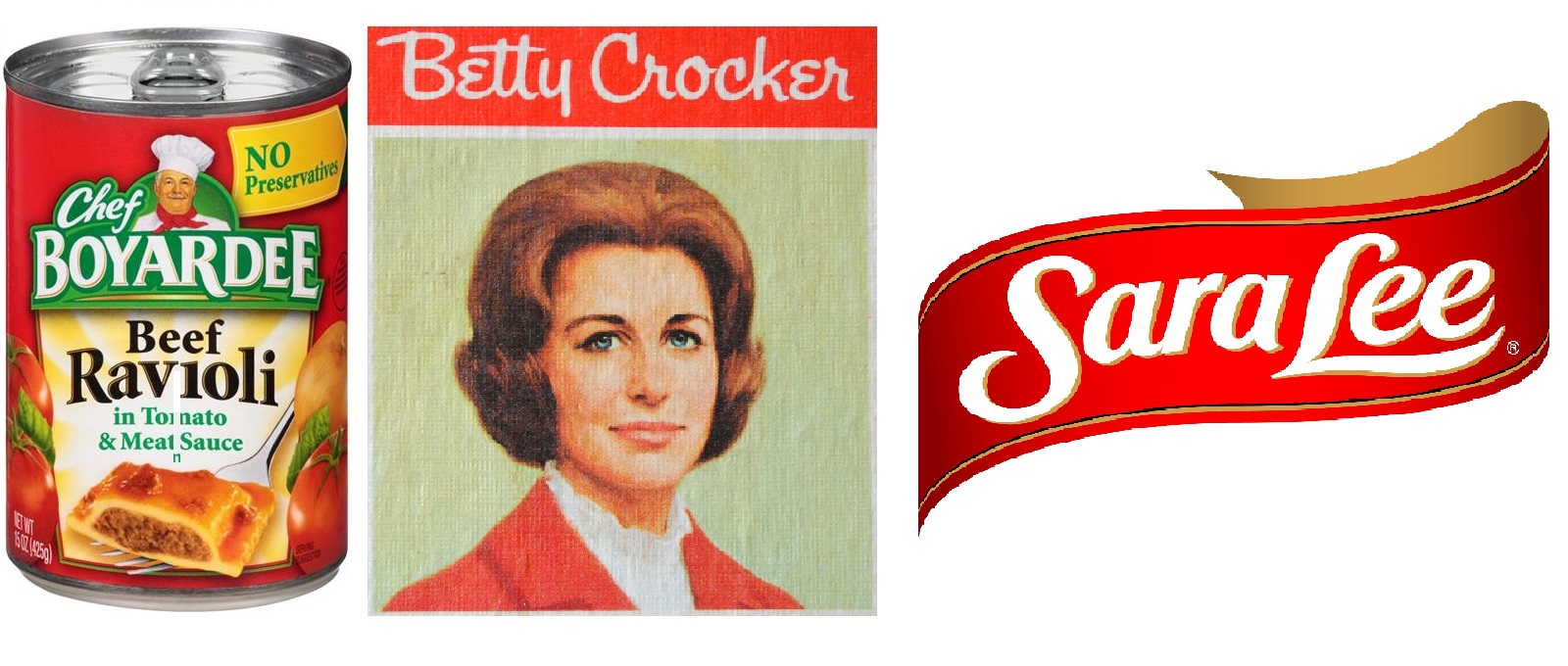
Day after day, as you shop the grocery aisles, leaf through magazines, click around the Internet, or drive around town, you're likely to encounter a lot of foods and food brands that are named after people: Betty Crocker, Sara Lee, and Aunt Jemima, for example. The question is how many of these iconic food characters are real and how many are just made up for advertising purposes. The list may surprise you.

Betty Crocker - Sorry, folks, Bets is a fake. Developed in 1921 by the Washburn-Crosby Company to help sell its food products and recipes, the name “Betty” was thought to be bright and cheery while “Crocker” was chosen as a tribute to Washburn-Crosby director William Crocker.

Sara Lee – She's for real. Around 1949, Chicago baker Charlie Lubin created a line of cheesecakes which he named “Sara Lee's” after his eight year old daughter, Sara Lee Lubin. Lubin later sold his recipes and the “Sara Lee” name to Consolidated Foods

Aunt Jemima – This one's a little tricky. In 1875, African-American comic and dancer Billy Kersands wrote a song about “Old Aunt Jemima.” Although there was never a “real” “Aunt Jemima,” actresses portrayed the character in minstrel shows throughout the latter part of the 19th century. Around 1889, St. Joseph, Missouri businessmen Chris L. Rutt and Charles G. Underwood appropriated the character to promote their new ready-made pancake mix. Numerous actresses made appearances as “Aunt Jemima” in various forms of advertising up through the 1960s, after which the old image of the plump “mammy” with a headscarf and a polka dot dress was retired and updated to look a bit less racially stereotyped and a little more like a modern homemaker.

Mrs. Butterworth – Need some syrup to go with those Aunt Jemima pancakes? Call in Mrs. Butterworth! But no matter how long and loud you call, she won't hear you. She's a made up character created by Pinnacle Foods in 1961.

Uncle Ben – Mars, Inc insists that well-known rice man “Uncle Ben” is based on a real person, an African-American rice grower known for the quality of his product. Of course, the bow-tied guy depicted on the box since 1946 isn't actually that rice grower: it is said that the image is that of a Chicago maître d' named Frank Brown. As for the “converted rice” process attributed to “Uncle Ben,” you can thank German-British scientist and chemist Erich Huzenlaub and British scientist and chemist Francis Heron Rogers for that. In fact, the process is called the “Huzenlaub Process,” but I suppose “Uncle Ben's Huzenlaubed Rice” wouldn't jump off store shelves as quickly.

Little Debbie – That cute little girl on the Swiss Cake Rolls, Nutty Bars, and Oatmeal Creme Pies can't be for real, right? Actually, she is, although there was a little artistic license taken with her image. Back in the 1960s, the founders of Collegedale, Tennessee-based McKee Foods, O.D. and Ruth McKee, decided to name a product after their 4-year-old granddaughter, Debbie. The artist who created the packaging, however, was instructed to make little Debbie look a little older, say 8 or 9.

Jimmy Dean – Yep, there was a real Jimmy Dean behind the sausage that bears his name. Born in Plainview, Texas in 1928, Jimmy Dean rose to fame first as a country music singer and television host. His biggest hit was the 1961 country/pop/rock 'n' roll crossover “Big Bad John.” He also found work as a film actor, appearing in the 1971 James Bond movie “Diamonds Are Forever.” But one day, he and his brother Dan were having breakfast in a Plainview diner when Jimmy made the statement, “You know, there has got to be room in this country for a good quality sausage!” And he decided to make one, founding the Jimmy Dean Sausage Company in 1969.

Oscar Mayer – Oscar's also the real deal. German immigrant Oscar Ferdinand Mayer started out working in a Detroit meat market before moving to Chicago in 1876. He labored in a North Side meat market for a few years, but eventually started up his own butcher and sausage shop in 1883.

Duncan Hines – Ice cream was the first Duncan Hines product to hit the market in 1950, sold by the Lehigh Valley Cooperative Farmers dairy of Allentown, PA. Then Durkee's Bakery in Homer, New York started selling Duncan Hines bread in 1952. Next came the iconic cake mix from Nebraska Consolidated Mills out of Omaha, Nebraska in 1953. But who was Duncan Hines and why did people want to put his name on everything? Born in Bowling Green, Kentucky in 1880, Duncan Hines was a traveling salesman representing a Chicago printer. As such, he ate a lot of meals on the road. And he kept a journal of places he liked. In order to help fellow travelers find a decent meal in the days before interstate highways and chain restaurants, Hines and his wife compiled a little book of good places to eat based on his travels and his journal. Then he expanded to lodging recommendations. By the mid-1950s, Hines was a food critic, writing a syndicated column that ran in newspapers across the country. The Duncan Hines “seal of approval” was only awarded to establishments – and products – that met his rigorous standards and were then permitted to display signs proclaiming “Recommended by Duncan Hines.”

Chef Boyardee – Yep, the chef on the spaghetti cans really existed and wasn't just a made up marketing character. His name was Ettore Boiardi, a real life Italian chef who emigrated from his native Piacenza in 1914. He went on to open his successful Giardino d'Italia (Garden of Italy) restaurant in Cleveland in 1926. Restaurant patrons were so taken with his tomato sauce that they asked for take-home samples, which the chef provided in clean milk bottles. He started selling his “Chef Boy-Ar-Dee” products nationwide in 1929, having changed his name to Hector Boyardee because Americans couldn't wrap their tongues around his Italian name. Boiardi produced canned rations for Allied troops during World War II, for which he was awarded a Gold Star order of excellence from the U S War Department.

Orville Redenbacher – No, the funny-looking guy with the horn-rimmed glasses and the bowtie wasn't just made up by an ad agency to sell popcorn. Orville Clarence Redenbacher, the former fertilizer salesman from Brazil, Indiana, was quite real. In fact, in “Orville Redenbacher's Popcorn Book,” he takes pains to state, “I want to make it clear that I am real.” He launched his “RedBow” hybrid popcorn – an amalgam of his name and his partner, Charlie Bowman's – in 1970 and by mid-decade had captured fully one-third of the American unpopped popcorn market.

Mama Celeste – There really is a “Mama” Celeste behind the smiling face on the frozen pizza boxes. Anthony and Celeste (née Luise) Lizio came to the United States from Italy in the 1920s, settling on Chicago's West Side, where they opened their first restaurant in 1932. Their pizza became so popular that in 1962, they shuttered their restaurant and went into business selling frozen pizzas to other restaurants. Quaker Oats got involved in 1969 and soon the frozen pizza with Mama's face on the box became one of the top selling brands of the 1970s. The Celeste brand today is owned by Pinnacle Foods.

Marie Callender – Marie Callender and her family lived in a trailer park in Huntington Beach, California in the 1930s. Marie baked pies to supplement the family income, pies which her son, Don, delivered on his bicycle. By 1948, Don had given up the bike and had founded a wholesale pie business supplying area restaurants. Later he started a restaurant of his own and named it after his mother. The restaurant became a chain and the chain spawned a line of packaged and frozen foods marketed under the Marie Callender brand.

Mrs. Smith – And since we're talking about frozen pies, how about Mrs. Smith's? Real person or marketing gimmick? Real as the day is long. Pottstown, Pennsylvania housewife Amanda Smith made some pretty good deep-dish, fruit-filled pies back in the early 1920s. So good, in fact, that her son, Robert P. Smith, started selling slices door-to-door and at the local YMCA lunch counter. Then came a delivery route (probably not on a bicycle) and a small store. All of this led to the 1925 formation of “Mrs. Smith's Delicious Home Made Pies, Inc.” The company began producing its now even more famous frozen pies in 1952.

Famous Amos – Did I say “famous?” How about “Famous Amos,” the cookie man? He's for real for sure. Wallace “Wally” Amos liked to bake cookies with his aunt in 1948 New York. When he went to work as a talent agent for the William Morris Agency, he would sometimes send his home-baked chocolate chip cookies to celebrities as an enticement for a personal meeting. And they were g-o-o-o-d cookies! So good that Marvin Gaye and Helen Reddy ponied up $25K for Wally to start his own cookie store on Sunset Boulevard in Hollywood. And the “Famous Amos” brand took off from there.

Mrs. Fields – Mrs. Fields turns out some pretty good cookies, too. But is there really a “Mrs. Fields?” There really is. Debbi Fields and her husband Randy opened the first of many stores selling homemade cookies in Palo Alto, California in 1977.

Captain Morgan – Okay, the pirate guy on the rum bottle has got to be a marketing gimmick, right? Yes and no. There was a real Welsh pirate...er-r-r “privateer”.... named Henry Morgan who roamed the Spanish Main from his base in Port Royal, Jamaica from 1663 until about 1671. He didn't make rum, but he did make a lot of money raiding ships and settlements around the Caribbean and the Gulf of Mexico. He wound up a wealthy sugar planter and lieutenant governor of Jamaica. When Seagram's started manufacturing a new rum in 1944, his name seemed as good a choice as any to slap on the label.

Okay. How about looking at some iconic food brands that don't have faces on the labels but do have real faces behind them.

Hormel – A real guy named George A. Hormel was a slaughterhouse worker in Chicago. He transitioned to being a traveling salesman dealing in wool and hides, which led him to Austin, Minnesota. He found that he liked it there, so he borrowed five-hundred dollars and opened a meat business that evolved into George A. Hormel & Co in 1891 and now operates as Hormel Foods.

Wrigley's – More than just a name on a chewing gum package and a baseball park, William Wrigley, Jr. was born in Philadelphia in 1861. With thirty-two dollars in his pocket, he moved to Chicago in 1891 and started selling soap. He offered customers a premium gift of baking powder with the purchase of his soap. He soon found the baking powder to be more popular, so he switched to selling baking powder and giving away chewing gum as a premium. And the gum got to be more popular than the powder, so......After introducing the world to “Juicy Fruit” and “Spearmint” in 1893 and “Doublemint” in 1914 and becoming a “confectionery magnate,” he wound up owning a major league baseball team (the Chicago Cubs), most of Catalina Island off the coast of California, a few hotels, some steamships, and five mansions across the country, the smallest of which was his 16,000 square foot “winter cottage” near Phoenix. Chew on that.

Birdseye – Yep. Real person. Clarence Frank Birdseye II is considered by most to be the father of frozen foods. Birdseye worked for the USDA and was in Labrador and Newfoundland off and on between 1912 and 1915, While there, he was taught by the native Inuit how to ice fish under very thick ice. In -40 ° weather, he discovered that the fish he caught froze almost instantly, and, when thawed, still tasted fresh, unlike the more conventionally frozen seafood he'd had in his New York home. This led him to pursue development of quick freezing methods that ultimately resulted in the founding of Birdseye Seafoods Inc. and later the Birds Eye Frozen Food Company in 1929.

Stouffer's – There's a real Stouffer in the history of Stouffer's. Abraham E. Stouffer, to be exact. He started with a Cleveland, Ohio area creamery and a dairy stand in 1914 and moved up to a restaurant around 1922. More restaurants followed, including the first locations outside Ohio. The Stouffer Corporation debuted in 1929 and expanded into frozen foods in 1946, ten years after its founder's death. The Stouffer's brand is now owned by Nestlé.

Keebler – When it comes to cookies, Keebler is really big. They are the second largest maker of cookies and crackers in the United States, and even though “Ernest J. 'Ernie' Keebler” may be the famous face of the brand, it was actually Godfrey Keebler who opened a bakery in Philadelphia in 1853, a bakery that eventually networked and merged with other bakeries to form the United Biscuit Company of America in 1927. Elves in hollow trees indeed!

Kellogg's – Snap, Crackle, and Pop, Tony the Tiger, Toucan Sam and, of course, Cornelius (the rooster on the corn flakes box) are the most notable faces of Kellogg's today. But the brand goes back to the turn of the twentieth century when the Kellogg brothers, Will Keith (“W.K.”) and Dr. John Harvey (“J.H”) set up the Battle Creek Sanitarium Health Food Company in Battle Creek, Michigan in 1898. The company was started to provide “health foods” – like corn flakes and granola – for current and former patients at Dr. J. H. Kellogg's Battle Creek Sanitarium. The company became known as the Kellogg Food Company in 1908 and began to market its products under the “Kellogg's” brand. When Will wanted to sell cereal outside the sanitarium's clientele base, J.H. balked at the idea and the brothers had a falling out. W.K. established the Battle Creek Toasted Corn Flake Company, producing and marketing – guess what? – Kellogg's Toasted Corn Flakes. As a result of the success of the cereal, the company name changed to the Kellogg Toasted Corn Flake Company in 1909 and later became the Kellogg Company in 1922, which it remains today

Smucker's – They say “with a name like Smucker's, you have to be good.” And the J.M Smucker Company has been producing very good jellies, jams, and other food products since Jerome Monroe Smucker started it in Orrville, Ohio back in 1897.

Campbell's – Okay, the “Campbell Soup Kids” are world-famous, but is there really a Campbell behind Campbell's? Oh, yeah. Joseph A. Campbell, a fruit merchant from Bridgeton, New Jersey, who started the “Joseph A. Campbell Preserve Company” in 1876. The company reorganized twenty years later and became “Joseph Campbell & Company” in 1896. But it was a chemist working for a wage of $7.50 a week, one John T. Dorrance, who shaped the company's future around 1897 when he developed a commercially viable method for condensing soup. He became president of the company in 1914 and eventually bought out the Campbell family.

Kraft – Canadian James Lewis Kraft immigrated to the United States in 1903 and wound up selling cheese door-to-door in Chicago. He lost $3,000 and a horse his first year in business. But things improved and soon J.L. joined up with his four brothers in 1909 to form the J.L. Kraft and Bros. Company. It became the Kraft Cheese Company in 1924 and continued to grow and expand to global proportions.

Heinz – Henry J. Heinz started out selling horseradish in Sharpsburg, Pennsylvania around 1869. He soon expanded his line to include ketchup, pickles, baked beans, and numerous other food products. His famous “57 Varieties” slogan was inspired by an advertisement for a shoe store boasting “21 styles.” Heinz picked the number “57” more or less at random because he liked the sound of it.

Lay's – When Charlotte, North Carolina-born Herman Warden Lay started selling potato chips out of his car in 1931, he probably had no idea where it would take him.

Bush's – Andrew Jackson Bush is the man behind the beans. He started the family enterprise back in 1904. And yes, Jay Bush, the guy who does the Bush's Baked Beans commercials with his dog, Duke, really is a member of the Bush family. He's A.J.'s great-grandson.

Ghirardelli – Domenico Ghirardelli was born in Rapallo, Italy in 1817. The son of an exotic food importer, he was introduced to chocolate at an early age and soon apprenticed as a candy maker. Ghirardelli emigrated to America in 1849 and opened a general store in Stockton, California, selling basic supplies but also confections to gold seeking miners. He later opened a second store in San Francisco, where the company that bears his name remains headquartered today. (Well, technically, it's across the bay in San Leandro, but......)

And since we're on the subject of sweets, let's examine:

Hershey – How many guys do you know who get their hometown renamed after them? Milton S. Hershey was one. After starting up a candy shop in Philadelphia in 1873, Hershey moved around a bit before landing back home in Derry Church, Pennsylvania in 1886. He founded the Lancaster Caramel Company there but after seeing a chocolate making demonstration at the 1893 World's Columbian Exposition in Chicago, he declared, “Caramels are just a fad, but chocolate is a permanent thing.” And, apparently, he was right.

Nestlé – Swiss confectioner Henri Nestlé was the founder of the company that bears his name and was also one of the main creators of condensed milk.

Heath – The toffee and milk chocolate Heath candy bar, now produced by Hershey, was first developed and marketed in 1914 by L.S. Heath.

Oh Henry – Nobody knows for sure where the name for the candy bar made of peanuts, caramel, and fudge coated in chocolate really came from. It was first introduced in 1909 by the Williamson Candy Company of Chicago
. The most popular theory holds that the bar was named by the guy who created it, one Tom Henry, owner of the Peerless Candy Company, who dubbed his confection the “Tom Henry Bar.” When Henry sold out to Williamson, they renamed the bar as “Oh Henry.”

Baby Ruth – The same ambiguity surrounds the Baby Ruth bar, made by Chicago's Curtiss Candy Company and originally marketed as “Kandy Kake.” The battle has raged for almost a hundred years over whether the bar was named for President Grover Cleveland's daughter, Ruth – the official stance held by the manufacturer – or for famous baseball slugger Babe Ruth. Both sides of the issue present evidence to support their claim and denigrate the other's. The Babe Ruth faction points out that Ruth Cleveland died at age 12 about seventeen years before the candy bar was created and that the former president himself, who hadn't been in office in over twenty-four years, died thirteen years before the bar was first produced. So why would a candy company choose to honor the name of a long dead president's long dead daughter? And why would a candy company located down the street from Wrigley Field not name a product after a baseball superstar – unless it was because they didn't want to have to pay him for the use of his name. We may never know.

Snickers – This one we do know: Franklin Clarence Mars owned Mars, Inc. – successor to the Mars Candy Factory and the Mar-O-Bar Company – in Minneapolis. He also had a favorite horse, a horse by the name of – you guessed it – Snickers.

Tootsie Roll – Here's another one with a fairly clear history. Austrian Jewish immigrant Leo Hirschfield started working out of a small candy shop in New York in 1896. He went bankrupt and committed suicide in 1922, but not before naming his most famous creation after his daughter, Clara, whose nickname was “Tootsie.”

Now let's turn to the names attached to some of your favorite fast food places. Like:

McDonald's – No, Ronald McDonald is not the owner of or the inspiration for the fast-food pioneering restaurant. A Chicago milkshake mixer salesman named Ray Kroc was actually the guy responsible for erecting “golden arches” around the world. But the place is called “McDonald's” instead of “Kroc's” because Ray was impressed by the modern, mechanized, “assembly line” approach to food preparation utilized by Richard and Maurice McDonald at their San Bernadino, California eatery. Ray partnered with – and some say shafted – the McDonald brothers in a franchising operation which started in the Chicago suburb of Des Plaines and blossomed into the McBehemoth we know today.

A&W – Started up in 1919 as a walk-up root beer stand in Lodi, California, under the auspices of Roy W. Allen – the “A” half of the name – and Frank Wright, who supplied the “W.”

Arby's – Back in 1964, a couple of restaurant equipment salesmen in Boardman, Ohio got the idea that fast food could be based on something other than hamburgers. “Why not roast beef,” said brothers Forrest and Leroy Raffel. And they called their venture “Arby's” based on the initials “RB” for “Raffel Brothers.” Clever, huh?

Wendy's – Yes, there is a real “Wendy” behind famously square “old-fashioned” burger joint Wendy's. In 1969, founder Dave Thomas dubbed his first restaurant at 257 East Broad Street, in Columbus, Ohio “Wendy's” in honor of his eight-year-old daughter, Melinda Lou Thomas, whom everybody called “Wendy.”

KFC/Colonel Sanders – Today, its just called “KFC”. It used to be known as “Kentucky Fried Chicken” until the Commonwealth of Kentucky trademarked their name in 1990, forcing anybody who wanted to use the word “Kentucky” in their business to obtain state permission and be subject to licensing fees. But way back when, the company that introduced chicken into the fast food mix was also known by the name of it's founder, Harland David Sanders, a guy who ran a gas station and restaurant in Corbin, Kentucky. Sanders developed a unique method for preparing fried chicken using a pressure fryer and “eleven secret herbs and spices.” Commissioned as a “Kentucky Colonel” by Gov. Lawrence Wetherby in 1950, “Colonel Sanders” went on to franchise his process and to have his name and image immortalized the world over.

Jimmy John's – Yes, Virginia, there is a real Jimmy John. After graduating from high school in 1982 second from the last in his class, Jimmy John Liautaud's father offered him a choice: military service or business. Jimmy John chose business and, with a $25,000 loan from Dad, opened a hot dog business that later morphed into a sandwich shop, the foundation of a franchising operation headquartered in Champaign, Illinois that now exceeds three-thousand stores nationwide.

Papa John's – There's a real “Papa John,” too. After selling his 1971 Z28 Camaro to purchase $1,600 worth of used pizza equipment, Jeffersonville, Indiana native John Schnatter converted a broom closet in his father's tavern into a pizza shop in 1984, and “Papa John's Pizza” was born.

Sbarro – On the topic of pizza, there really is a Sbarro behind the Sbarro pizza chain found in malls across America. Italian immigrants Gennaro and Carmela Sbarro opened their first salumeria (an Italian grocery store) at 1701 65th Street and 17th Avenue in Bensonhurst, Brooklyn, New York in 1956. The initial success of the business and its fresh Italian fare led to other locations in the metro New York City area. The first mall-based Sbarro opened in Brooklyn's Kings Plaza Shopping Center in 1970 and spread nationwide from there.

Burger King – C'mon, really? You didn't actually think there was a real “Burger King,” did you? Nah, the place was called “Insta-Burger King” – after the Insta-Broiler used to cook the burgers – when it was founded in 1953 in Jacksonville, Florida by Keith J. Kramer and his wife's uncle Matthew Burns.

Finally, a few words about a few foods that were named after few famous people.

Graham crackers – named for 19th century temperance preacher Sylvester Graham

Turkey/Chicken tetrazzini – generally believed to have been invented around 1908 at either San Francisco's Palace Hotel or New York City's Knickerbocker Hotel and named after Italian opera star Luisa Tetrazzini.

Fettuccine Alfredo – credit this one to an early 20th century Roman restaurateur named Alfredo di Lelio

Cobb salad – invented around 1937 at Hollywood's Brown Derby restaurant and named for owner Robert Howard Cobb

Salisbury steak – the name has nothing to do with the cathedral city in Wiltshire, England. The dish was developed by an American diet physician, Dr. J. H. Salisbury around 1897.

Bananas Foster – created in New Orleans at Brennan's restaurant in 1951 by chef Paul Blangé, the dessert was named after owner Owen Brennan's friend, Richard Foster.

Caesar salad – no Roman emperors were involved in the naming of this salad. It was named for Italian immigrant restaurateur Caesar Cardini, who claimed to have first made it at his Tijuana, Mexico restaurant in 1924.

German chocolate cake – nothing “German” about it except the name of its creator, American baker Samuel German, who developed a type of dark baking chocolate for the Baker's Chocolate Company in 1852.

Earl Grey tea – thought to be named after Charles Grey, 2nd Earl Grey and British Prime Minister in the 1830s, who supposedly received a diplomatic gift of black tea flavored with bergamot oil.

Granny Smith and McIntosh apples – Maria Ann “Granny” Smith developed the apple that bears her name in Australia in 1868, while Scottish-Canadian farmer John McIntosh is said to have discovered the original McIntosh sapling on his Dundela farm in Upper Canada in 1811.

Melba toast – created by original “celebrity chef” Auguste Escoffier around 1897 in tribute to Australian opera singer Helen Porter Mitchell, whose stage name was Dame Nellie Melba.

Nachos – a maître d'hôtel at a restaurant in the Mexican border town of of Piedras Negras is credited with creating this popular snack for the wives of U.S. soldiers stationed at Fort Duncan in nearby Eagle Pass, Texas in 1943. The ladies arrived at the restaurant after it had closed for the day, but Ignacio "Nacho" Anaya went to the kitchen and scavenged. He cut tortillas into triangles, fried them, added shredded cheddar cheese and sliced pickled jalapeño peppers and served them up. The women were wowed and when they asked what the dish was called, the clever waiter answered, “Nacho's especiales,” which eventually morphed into “special Nachos” and finally just “nachos.”

The Sandwich – everybody knows this one: 18th century aristocrat and gambler John Montagu, 4th Earl of Sandwich, was hungry but didn't want to interrupt his card game to eat. So he ordered his valet to bring him slices of meat tucked between two pieces of bread. That way he could eat one-handed without using a fork or getting his cards greasy. The form caught on as others began to order “the same as Sandwich!”

Thursday, November 15, 2018

Holiday (Or Anytime) Mashed Potatoes Done Right


The Best Mashed Potatoes Aren't Really “Mashed”

I have a confession to make: the first batch of mashed potatoes I ever made came from a box. They were “French's Mashed Potato Flakes,” as I recall, and I was about seven years old when I made them.

Things have changed, although I do still keep dried mashed potato flakes around. They come in handy for lots of other things in the kitchen. Potato bread, for instance. But when it comes to actual serve-'em-up-for dinner mashed potatoes, I rely on real, honest-to-goodness potatoes that you have to wash, cut up, cook, and mash. Is it more work? Sure it is. Is the end result better? Definitely.

That said, however, when it comes to the “wash, cut up, cook, and mash” part of the deal, there seem to be as many opinions on how to do it as there are grains of sand on a beach. Everybody's got a “recipe” that they learned at their granny's knee or something, but sometimes you can teach an old dog new tricks. I know I've certainly picked up some tips and tricks for better mashed potatoes over the years – besides not making them out of a box – and I'd like to take this opportunity to pass some of them along.

The first thing I learned about making better mashed potatoes is pretty straightforward: use better potatoes. You know that definition of insanity that says something about doing the same thing over and over and expecting different results? Yeah, that was once me with cheap, “bargain” potatoes from the grocery store. Those “bargain” potatoes you find “on sale” at the store aren't usually much of a bargain after you wind up throwing out about half of every other potato in the bag. There's a reason they're “on sale,” folks and it has nothing to do with your grocer's altruistic desire to improve your life. You get what you pay for, so pay for the better quality spuds.

Now you have to decide how you like your mashed potatoes: do you want them light and fluffy, rich and creamy, or just a little chunky with maybe some skin left on? Most people go for the light and fluffy option that is buttery and smooth. For you rich and creamy lovers, that's okay, too. But achieving that texture without turning your potatoes into a starchy glue can be a bit tricky. And as far as the chunky, skin on method, well, it's probably easiest to prepare, but I'm not so much into chewing my mashed potatoes and picking bits of skin out of my teeth. Sorry. Personal preference. So let's focus on the more popular method, light and fluffy.

First, mix 'em up a bit. Everybody and his or her mother uses stalwart old russet potatoes for their mash, right? Ah, but as Hamlet might have said had he been a decent cook, “There are more potatoes in heaven and earth, Horatio, than are dreamt of in your philosophy.” More precisely, there are two types of potato: starchy and waxy. Within those parameters there are then dozens of different varieties, russets being just one variety of starchy potato. Make no mistake, there's a reason the russet – or “Russet Burbank” – is also called a “chef potato.” (Well, in the UK they call them “Maris Pipers” because they didn't have Luther Burbank.) They've always been the ones that are most popular with chefs. Until a few chefs started experimenting. And came up with some nifty – and tasty – results.

Starchy potatoes are always best for mashed potatoes. Waxy spuds – like red bliss or new potatoes – are great for roasting or for using in soups, stews, or potato salad. They are very flavorful, but they are also very dense and firm. That's why they're so good for long cooking preparations; they add great flavor but they hold their shape and texture well. Which is not really what you want in a light, fluffy mash. So stick with starchy potatoes that will fall apart easily. Russet's, of course, but also consider Yukon Gold.

Yukon Golds are a bit less starchy than Russets. Russets are a “high-starch” potato while Yukon Golds are more “medium starch.” The texture difference isn't going to be that discernible in a mashed preparation, but the flavor difference will be. Yukon Golds are quite flavorful. Some people like a straight up all Yukon Gold mash because the very buttery flavor and yellow color appeal to them. I'm not so much in that camp. I like Yukon Golds, but not as an “all in” thing. Russets, on the other hand, are, frankly, rather low in flavor, but their light, fluffy texture is superior. So, the best results for perfect light, fluffy, flavorful mashed potatoes will come from a mix of Russets and Yukon Golds. Half and half maybe? 60/40 perhaps? Make a couple of batches and play around until you get the balance the way you like it.

Next, we have to consider technique. Flavorwise, the mix of Russet and Yukon Gold potatoes will be great for either light and fluffy or rich and creamy, but the final outcome will be determined by the mashing technique. Basically, the best mashed potatoes aren't really “mashed” in the traditional sense.

Here's a quick look at some science behind mashed potatoes. Potatoes – like everything else – are made up of specific kinds of cells. Cells, of course, consist of molecules, which are made up of atoms and all the other stuff you should have paid more attention to in class. The important thing to remember here is that potato cells are made up primarily of starch molecules. These cells are a type of carbohydrate bound up as tight granules surrounded by pectin, a water soluble gelatinous polysaccharide, if you want to be excruciatingly correct. When potatoes start to cook, the pectin starts to break down. The starch molecules within act like little balloons and soak up all the water they can hold before bursting and releasing all that starchy goodness. And it's the concentration of this starch that will ultimately influence the consistency of the finished dish. Got me? Stick around. It gets easier. Bottom line: if you want light, fluffy mashed potatoes, you want there to be as little sticky, gluey starch in your finished dish as possible.

Now, when you beat the holy hell out of a potato, you wring out and release every atom of starch that potato has to hold. The result? Wallpaper paste. I'm serious: you actually can make wallpaper paste from potato starch. Do you want to eat it with a little butter and some salt? Not so much. So keep your little starch bombs as far away from things like food processors as possible. And if you simply must have that oh-so-French creamy texture that the Frenchies call pommes purée, okay. Do as the French do and whack 'em with an electric mixer until they practically pour out onto a plate. But be careful: the difference between pommes purées and wallpaper paste is a very fine line, indeed.

I'm getting ahead of myself a bit. Before we do all the processing, we have to do the cooking. There are two schools of potato cooking when it comes to making mashed potatoes. One school holds that you absolutely must cook your potatoes whole and skin on for optimal texture and flavor. Unpeeled potatoes, they say, absorb less water and hold in the starches better. And there's a good bit of flavor in the skins themselves that is infused into the potato as it cooks. All true.

The other school says peel' em, chunk 'em, and boil 'em. I'm sorry, potato purists, but I'm firmly in that “other school.” I've tried both ways and fail to detect significant difference. And cooking potatoes whole takes longer and peeling and cutting them while hot is a pain in the......hand. No, I'm a big believer in peeling, cutting into quarters or other workable chunks, and boiling. In salted water, by the way. The first step to seasoning your completed dish is adding flavor to the water. Just like pasta, when those little starch cells expand and take on water, they also take on flavor. And it's flavor you simply can't add later. You may not need as much salt as for pasta – i.e. a tablespoon per quart – but do be generous.

Oh, and another “by the way:” unlike pasta, you want to start your potatoes cooking from cold water. Dropping your spuds into already boiling water will usually lead to uneven cooking. You can wait until the water heats up a little to add your salt if you want it to dissolve more rapidly and efficiently and thus avoid damaging your cookware. The salt won't be absorbed into the flesh of the potato until the cooking process starts anyway. But put the cut up potatoes in the cold water first and then crank up the heat.

Like most people, I would rather have light and fluffy mashed potatoes that have a little body to them. Perhaps not so much body that you can use them to sculpt replicas of Devil's Tower (remember “First Encounters of the Third Kind?) but enough that maybe they'll hold up a fork, okay? And the way to achieve that quality is with a ricer or a food mill.

Huh? What about grandma's faithful old potato masher? Give it back to grandma. It's a potato torturing device left over from a less enlightened age in the treatment of tubers. To achieve ultimate lightness and fluffiness, you want to coax the starches out of the potatoes, not crush them out at the end of a blunt-force object. The old masher is just a slower, less effective way to make glue.

I feel your questions: what are food mills and ricers and what have they got to do with potatoes? We'll start with a food mill. It's a kitchen tool that no kitchen should be without, although most are. Basically, it's a mechanical means of hand-processing soft foods like tomatoes for sauces, cooked apples for applesauce and, of course, cooked potatoes. It's a three-piece gadget consisting of a bowl, a variety of different processing blades, and a crank handle. You fit the blade of your choice into the bowl, affix the handle, toss in whatever you're preparing, and crank. Within seconds, you've got soft mounds of, in this case, potatoes that are light and fluffy and ready to mix with the rest of the ingredients we'll get to in a minute.

A ricer works the same way and is even less complicated to use. It looks like a giant garlic press and functions in much the same manner. A ricer is a simple, two-handled unit joined by a hinge. It's got a plunger on one handle and a perforated receptacle or “hopper” on the other. The plunger fits into the hopper and when you squeeze the handles together, the plunger presses the chunks of cooked potato through a series of small holes in a cutting blade. As with the food mill, you first select the size of the blade based on your desired results. Some ricers have separate blades that you have to insert and some have a movable blade you can just dial around to achieve the texture you want. The results look like grains of rice, hence the name for the tool. And those grains are the secret to transforming your lumpy mashed potatoes into a thing of beauty.

The actions of the ricer or the food mill are much gentler on the potatoes than your old masher or a mixer of some sort. The devices provide a uniform size, an even texture, and they preserve more of the integrity of those little balloon-like starch cells. As a result, you don't need as much stirring and mixing of the final product as you do with other methods. The “riced” potatoes are ready to rock and roll with your other ingredients just the way they are.

And what about those other ingredients? All you need for great mashed potatoes are fat, dairy, and seasoning. You can go off on tangents with garlic and herbs and spices and whatever else makes your taste buds tingle, but for superior “plain” mashed potatoes, all you need are those three elements.

Let's start with fat. And that means butter. NOT MARGARINE!!! That horrible plasticized abomination has no place in any decent kitchen. Laws still on the books in Wisconsin even prohibit serving the vile stuff to prison inmates. No. I mean real, honest-to-goodness, direct from a cow and not a chemistry set butter. Preferably but not essentially unsalted. And in quantities more than you would think wise. One chef I know calls for “egregious amounts” of butter in his mashed potato recipes. By “egregious” he means more than a whole stick per pound of potatoes. If you're cooking up five pounds of spuds for your holiday table, you'd be using about a pound-and-a-half or more of butter. And that's probably excessive. But don't be cheap with it. The old saying “there's flavor in fat” is true. Use as much butter as you're comfortable with – and then throw in an extra tablespoon or two. Softened butter works best.

Now dairy. You need milk, cream, or a combination of both to add an extra layer of flavor and to achieve that final texture you're looking for. Ready made half-and-half is a good option. You don't need a lot. I was showing off my mashed potato skills to a client recently and overmilked the damn things, creating a nice warm potato soup. Way to impress. So add your dairy incrementally until you get the texture you're seeking. Oh, and make sure the liquid is warm. Pouring cold dairy into warm potatoes rapidly cools down the whole mix and increases the likelihood of lumps.

Personally, I tend to mix softened butter into my riced potatoes first and then add in my warmed dairy. There are a couple of reasons, one scientific and one not so much. Scientifically speaking, mixing in the fat with the starch will help coat the starch cells and keep them from absorbing as much of the water part of the dairy component, which is what makes the potatoes gluey. From a practical standpoint, if you do as a lot of folks do and melt your butter in with your milk or whatever and then pour it all in at once, you're losing out on the benefit of some of that butter if you don't wind up using all the liquid. You know, like if you find yourself on the edge of potato soup. But......whatever works for you.

And then you finalize your seasoning. If you adequately salted the cooking water, here's where it will pay off because you won't need as much salt in the final preparation. And if you used salted instead of unsalted butter, this is even more so. The only way to tell is to taste. Culinary school 101: taste, taste, taste! Once you've tasted, adjust your salt accordingly. Add freshly ground black pepper if desired, although white pepper is an option if you don't want little black specks in your fluffy white mash. That's it for me. Some people go on and on with chives and herbs and parsley and such, but for me salt and pepper completes the dish. That and a little garnish of butter to gild the lily.

As I said earlier, if you want to cream your potatoes into a pommes purée, that's your decision. One tip I will pass along to you French chef wannabes is to cook your potatoes in the dairy mix. It'll infuse extra flavor and almost guarantee maximum creaminess. And if you absolutely have to, have to, have to have that almost liquid consistency, DON'T use a food processor or a blender. Instant wallpaper paste. Get that texture in a stand mixer fitted with a paddle attachment or use a hand mixer. If you've got one of the nice ones that you can fit with just one whisk or beater, so much the better. Work at low speed and don't overwhip.

Oh, and by the way........one more confession/guilty secret: there is a down and dirty solution to the “potato soup” problem. Thicken 'em up with dried mashed potato flakes. See. I told you they had lots of uses.

Buon appetito!

Tuesday, November 6, 2018

Sold On Sous Vide


Darn Close To Foolproof

I've often said that my home kitchen is ridiculously over-equipped. I've got stuff at home a lot of restaurants don't have. But I am definitely not a “gadget guru.” I'm not prone to the useless geegaws you see on TV commercials. You won't find a stick butter cutter or a banana slicer or a twirling spaghetti fork taking up valuable space in my kitchen. For one thing, even if I wanted such things, my wife wouldn't let me have them. You know how some guys tell their wives if they want a new pair of shoes, they have to get rid of an old pair? That's kind of the way my wife is with me in the kitchen.

So my wife was rather dubious when I told her I wanted an immersion circulator. I had been hearing wonderful things about the sous vide method of cooking for a long time, but the necessary equipment was prohibitively expensive. However, in the last couple of years the prices have come down to the point where you can buy such stuff at Walmart. As a matter of fact, that's where I got mine.

Wait a minute,” I hear you say. “Immersion which? Sous what? What language are you speaking? French?” Actually, yes. “Sous vide” is French for “under vacuum,” and a vacuum sealer one of the pieces of equipment it's handy to have in order to cook something sous vide. The other more essential piece of hardware is an immersion circulator. And whereas once such arcane and esoteric things were only available at specialty suppliers at costs approaching the ridiculous, nowadays you can buy them, as I said, at places like Walmart for a couple hundred bucks or less, thus moving a fancy French technique once reserved for expensive high-end kitchens into the home kitchen for an affordable price.

In a nutshell, “sous vide” refers to the process of vacuum-sealing food and cooking it in a temperature controlled water bath. Or a bain-marie, if you want to be painfully French about the whole thing. This allows food to be cooked to a very precise temperature while retaining maximum moisture and flavor and with almost no chance of over or under cooking. And no shrinkage either: if you start out with a 10 ounce steak, you'll wind up with a 10 ounce steak.

There are three characteristics of sous vide cooking: containerized cooking that separates the food from its heating environment, pressurized enclosure using full or partial vacuum, and low temperature slow cooking. Each of these techniques developed separately at different points in time. They were all brought together as a distinct cooking method by a combination of engineers and chefs in the late 1960s and early '70s.

Now, you need to understand that this is a low and slow method of cooking. If you've only got ten minutes to bust out a steak for dinner, forget sous vide and break out the old frying pan. A sous vide steak is going to take at least an hour. BUT, that said, it's going to be a perfect steak when it's done. The way the fancy restaurants work around this time issue is that they cook up a bunch of steaks via sous vide in advance and stick them in a refrigerator. Then when an order comes in, they take out a pre-cooked steak, slap the steak in a hot pan, sear it off for a couple of minutes, and viola!, they can deliver a perfect steak in no time. And you can do that at home, too.

And it's not just for steak. So far, besides steaks, I've sous vide cooked ribs, chicken breasts, potatoes, and asparagus. And they all turned out perfectly with no more effort than it took me to prep them. And cleanup was a breeze: I emptied the water out of the pot and threw away the plastic bags.

Here's how it works. You take a big pot, something tall like a stock pot, and you attached the immersion circulator to the side of the pot. My circulator has a big clamp for that purpose. Then you fill the pot with water to the appropriate level. There's a “MIN” and “MAX” line etched on mine. Using hot or warm tap water will speed up the process because the machine will take less time to bring the water to temperature.

Next, you bring your vacuum sealer out. Prep and season whatever you're cooking and place it in a bag you can seal up with the sealer. You can buy premade bags or make them yourself from specially designed rolls of plastic material. You can even bypass the vacuum sealer altogether and use heavy-duty zip-top plastic bags. Since you're never going to heat anything to anywhere close to the boiling point, regular heavy-duty bags will work. Just make sure you get all the air out of them. There are a couple of ways to do this: you can leave a small opening at one corner, stick a straw in there, and suck out the air. Or you can use the water immersion method wherein you slowly submerge the bag in water until the outside water pressure forces all the inside air up and out the top of the bag. Either way works – but a vacuum sealer works better.

Once you've got your food seasoned and sealed, immerse the bag in the pot to which you have attached the circulator and turn the device on, setting the time and temperature required for whatever you're cooking. It's a good idea to secure the bag to the side of the pot so it doesn't go floating around as the water circulates. I use a binder clip. I've heard clothespins work, too. Or a small clamp. Anything that holds the bag in place. The circulator will heat the water until it reaches the desired temperature. Then the circulating motor will kick in and start moving the water. The combination of the heat and the circulation will cook your food in the preset time. Like I said, a steak takes about an hour at 135 degrees Farenheit and asparagus cooks in about twelve minutes at 175 degrees.
You simply cannot under or overcook your food because the machine keeps the water at a precise temperature for a precise length of time. You couldn't “burn” something if you tried. The temperature of the food cannot exceed the temperature of the water in which it's being cooked. And because it's vacuum sealed, there's no loss of moisture, flavor, color, texture, or aroma.

When the process is complete, you just take the bag out of the water, open the bag, remove the cooked contents, and do whatever you need to do to finish the dish. In the case of a steak, that might include tossing the steak in a hot pan for a couple of minutes to give it a nice sear. I have one of those “George Foreman” type electric grill things and it did a perfect job finishing the last steak I cooked sous vide, right down to giving it beautiful grill marks in about a minute. And no smoky kitchen full of dirty pans afterward. I emptied the water out of the stock pot and wiped down the grill surface and I was done. And there was a tender, moist, flavorful mid-rare steak with a gorgeous crust and grill marks sitting there on a plate looking delicious.

In case you couldn't tell, I'm sold on sous vide. I've always thought it was a great if somewhat expensive concept in theory, but now that it's economical enough to be practical......well, I may just go out and buy another one of the things.

There's an old aphorism that says “anything said to be 'foolproof' fails to account for the ingenuity of fools.” And I have found this to be generally true. Somebody could probably screw up a sous vide if they tried hard enough. But so far I haven't been ingenious – or foolish – enough to figure out how.

Vacuum sealers are everywhere these days and you can get a good one for a hundred dollars or less. However, even though they've become vastly more affordable, immersion circulators aren't falling out of trees. You'll have to hunt for one. Mine came from Walmart, but my local store had them on clearance. Largely because, I suspect, the average Walmart shopper didn't know what the hell the thing was and hence they didn't sell many. You can still get one at Walmart.com. Target has them, too. And you can find them at higher end stores like Williams-Sonoma, but expect to pay higher end prices: the same unit I bought at Wallyworld for sixty bucks sells for $160 at Williams-Sonoma. Bed, Bath & Beyond has one similar to mine for a hundred dollars. And, of course, there's always Amazon.

Have I piqued your interest? I hope so. Sous vide is a really great idea for both professional and home cooks. So go out and acquire the equipment and start cooking. Who knows? Your significant other may be so impressed by your new gadget that she or he will even let you keep your banana slicer or your twirling spaghetti fork.